- Data analytics
Connecticut's House Bill 5524 would ban Styrofoam takeout packaging
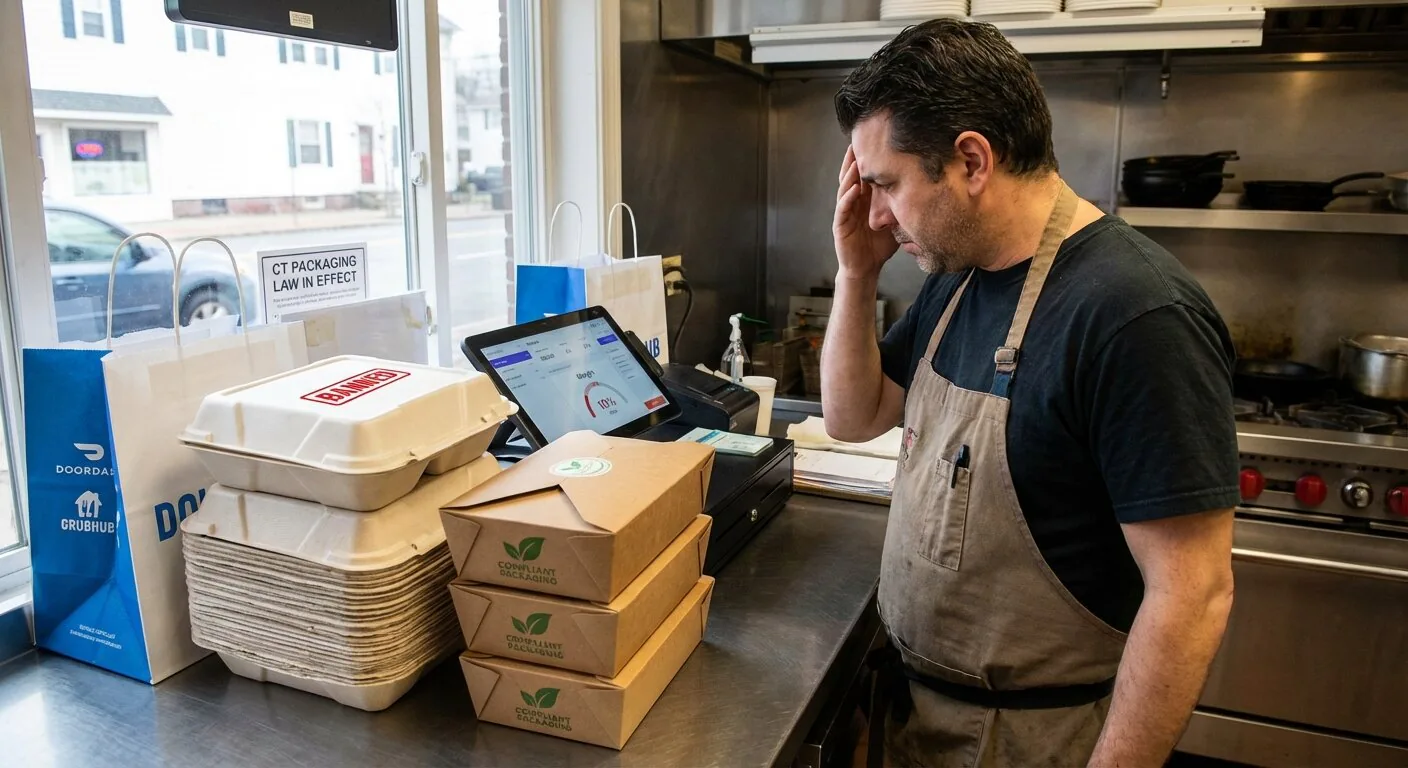
Connecticut's proposed Styrofoam ban challenges restaurant profitability. Learn how data-driven menu optimization helps brands adapt to packaging laws.
Table of contents
Connecticut lawmakers are considering House Bill 5524, a strict ban on Styrofoam packaging with new limits on single-use items like straws and napkins. The proposal could force restaurant owners to overhaul their takeout operations or risk going broke.
The bill aims to reduce environmental waste by prohibiting polystyrene containers. Lawmakers argue the bill is necessary to modernize trash systems and reduce litter. Many operators report that takeout and delivery now account for 30 to 50 percent of their total business, so packaging decisions cover heat retention, moisture control, and a meal that looks as good on a kitchen table as it does in a dining room, on top of cost.
Styrofoam has long been the industry standard for takeout because it is cheap, clean, and provides excellent insulation, so the debate goes straight to unit economics for restaurant chains and food delivery platforms. Cardboard or paper-based alternatives often struggle to keep food crisp or hot during long delivery windows. When the food arrives soggy, customers blame the brand and rarely the state legislature.
Industry leaders also describe operational friction. Under the new rules, customers must specifically request napkins and utensils, and in a high-volume QSR environment those extra steps add precious seconds to order preparation. Over a shift, the seconds add up to longer wait times and higher labor costs. A customer who forgets to check a box and gets no fork for a salad can leave a negative review that damages the brand's long-term digital health.
The real cost sits in hidden variables: a single container might cost only a few cents more, but when quality drops because of poor packaging, delivery volume often follows. Without granular data tracking, it is hard to tell whether a dip in sales after the 2028 ban comes from seasonal trends or from food quality hurt by new packaging materials.
Review keywords flag dishes that travel badly
Sales figures alone do not show how customers react to the new packaging and the "request-only" utensil policy. Aggregating feedback across delivery platforms identifies the specific dishes that fail to travel well in eco-friendly containers. Review sentiment analysis can catch early warning signs, such as a sudden spike in keywords like "soggy," "cold," or "missing fork" in a state like Connecticut, so brands can adjust their menus or source better packaging before a local ban turns into a nationwide hit to their bottom line.
Lessons from New York and California menus
Smart operators are already using competitive intelligence to see how peers in states like New York or California managed this transition. Watching how competitors adjust their menu prices or remove "travel-sensitive" items lets brands skip the trial-and-error phase that leads to financial loss, and decide on supply chain changes before the law takes effect.
Each item on the delivery list now has to suit the new rules. Restaurant groups can use menu optimization to adjust portions, pricing, and packaging choices based on real-world performance metrics, which protects profitability and customer satisfaction as packaging costs and operational complexity grow.
If you sell takeout in Connecticut and want early warning on dishes that travel badly, contact DoubleData.
