- Data analytics
Vancouver Blocks Delivery Robots: What It Means for Last-Mile Logistics
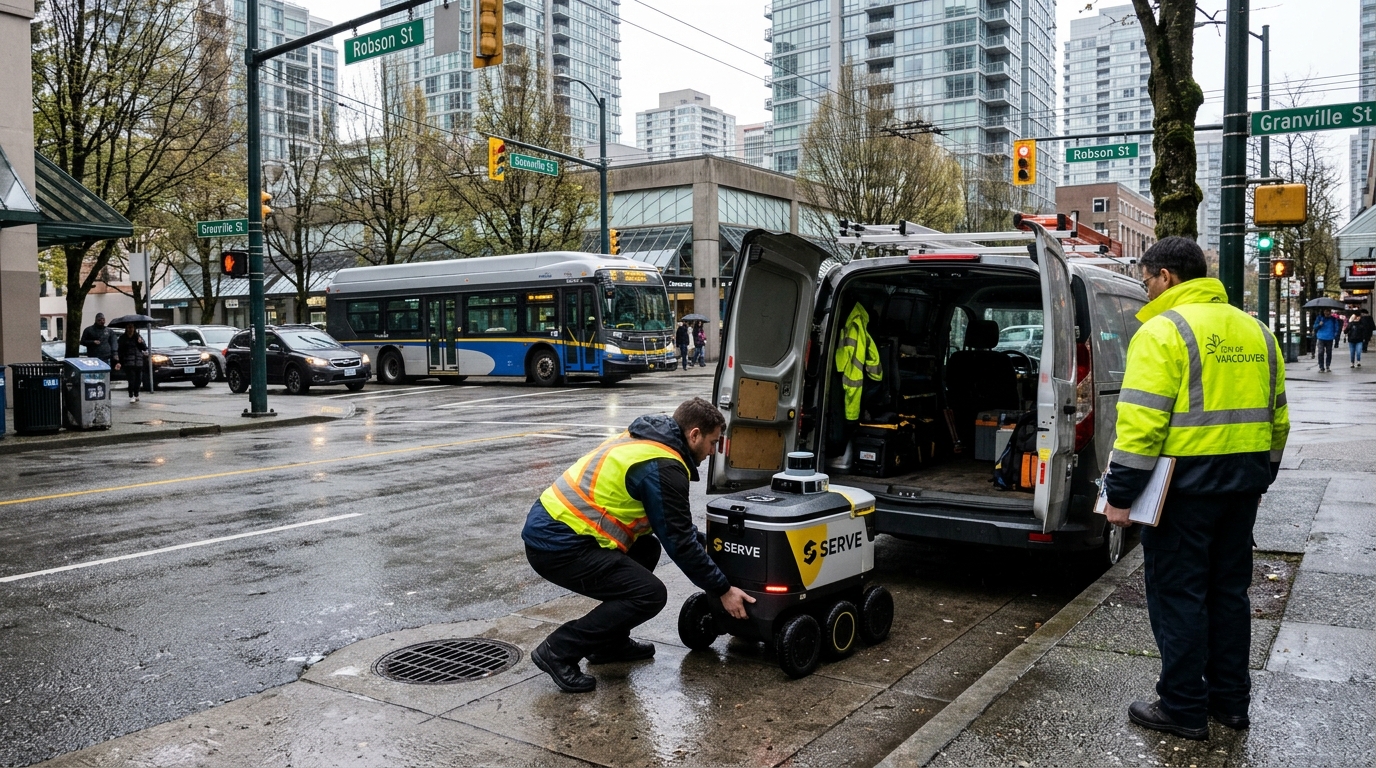
Vancouver City Council blocks autonomous food delivery robots. Explore how this regulatory shift impacts last-mile fleet strategies for delivery platforms.
Vancouver City Council has officially cancelled a planned pilot project with Serve Robotics, stopping autonomous delivery before it could even begin. This decision reflects a growing tension between high-tech delivery solutions and the reality of urban infrastructure and accessibility.
The decision marks a significant shift in Vancouver's approach to food tech. Under a previous administration, the city had planned a six-month trial in high-traffic areas like Downtown and Kitsilano. However, the new council majority voted to abandon the project. They cited concerns about the commercial use of public space, risks to people with disabilities, and the impact on local employment. This move effectively sidelines the fleet of small, electric robots that were expected to reduce car trips and support local restaurants.
For executives in the food delivery space, this is more than just a local policy change. It is a clear signal that regulatory risk is the biggest hurdle for "last-mile" innovation. Critics of the pilot, including disability advocates and pedestrian safety groups, argued that Vancouver’s narrow sidewalks are already too congested. They suggested that adding unpredictable robots could create barriers for the visually impaired and further crowd the walking space. This pushback forces companies to rethink how they will scale autonomous solutions in cities with similar density and older infrastructure.
Data intelligence provides the clarity needed to navigate these setbacks. Often, companies approach these pilots as a way to gather data, but city councils are now demanding that the data exist before the pilot starts. By using granular market intelligence, platforms can analyze how current delivery methods are performing in these specific zones. They can identify where human couriers are struggling and where robots would have actually provided a benefit. Without this evidence, city officials are likely to see tech trials as an unnecessary risk rather than a solution.
Navigating the New Last-Mile Reality
As Vancouver returns to a traditional delivery model, the competition for courier efficiency will intensify. Platforms cannot rely on autonomous hardware to lower costs in this market. Instead, they must focus on optimizing their existing networks of drivers and riders. Understanding the composition of the market is the only way to maintain a competitive edge when innovation is restricted by law.
To stay ahead in these restrictive environments, industry leaders must Benchmark Competitor Fleet performance. This allows companies to see exactly how rivals are fulfilling orders and where their own logistics can be improved to compensate for the lack of robotic assistance. In a world where the sidewalk is off-limits, data is the only tool left to drive efficiency.
To learn more about how we can help you optimize your delivery operations with high-quality data, contact our team today: https://doubledata.com/about-us/contact#form
