- Data analytics
Uber pushes into grocery and retail to win local commerce
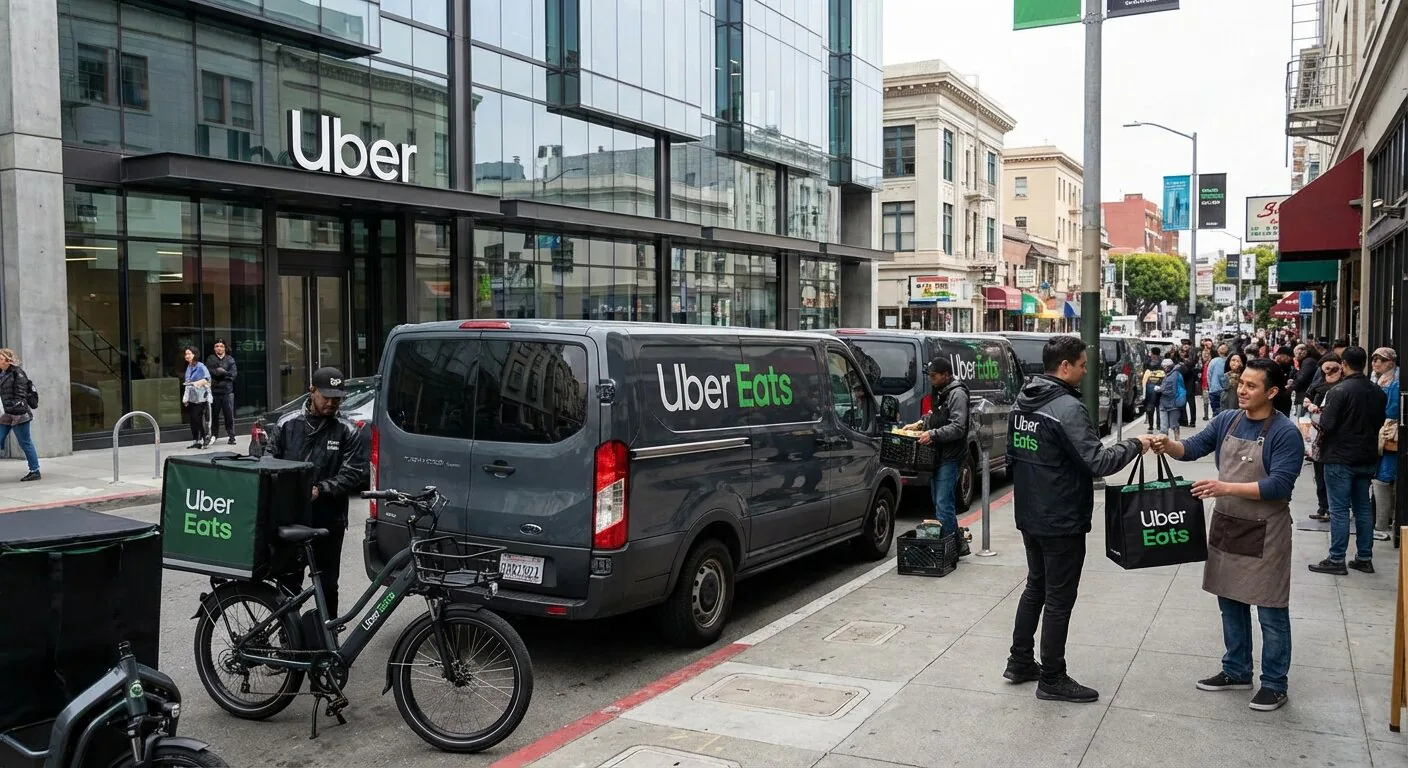
Uber is expanding into grocery and retail. Learn why data intelligence is key to tracking this massive shift in the local commerce landscape.
Uber is aggressively moving beyond ride-hailing and food delivery to capture the multitrillion-dollar local commerce market. Using its existing driver network and high-margin advertising, the company is positioning itself as the primary operating system for everyday local transactions.
The market long viewed Uber primarily as a mobility company, yet grocery, retail, and convenience items are now joining the core platform. That turns a transportation service into a logistics engine that connects consumers with local goods on demand. This "local e-commerce" model relies on a flywheel where more merchant variety attracts more users, which in turn brings in more couriers.
Recent data suggests that growth in less-dense, suburban markets is outpacing major cities by nearly double. Uber now competes for the morning grocery run and the mid-day retail purchase as well as the Friday night dinner order, and the infrastructure built for rides delivers massive economies of scale in sectors that rapid delivery platforms had not touched before.
Traditional methods struggle to track an expansion this complex. Monitoring Uber's footprint across thousands of suburban markets takes granular data, and without it, it is easy to miss how quickly a platform is saturating a specific region or category. Executives need to see where the new boundaries of the market are being drawn and how quickly these new service layers challenge their own share.
Subscriptions and ads lower Uber's customer costs
As Uber scales its subscription models and advertising business, its cost of acquiring and retaining customers drops, which raises the barrier to entry for smaller players. Food delivery platforms and restaurant chains need to look beyond their current service areas and identify exactly where the market is growing and which categories see the most traction.
Suburban growth by category is the figure to watch. Teams that monitor TAM growth across new territories and retail categories can adjust logistics, pricing, and partnership strategies before a competitor locks down the local market.
If you want to see where Uber's grocery and retail push is growing in your territories, contact our experts at DoubleData today.
Source: https://www.fool.com/investing/2026/03/23/uber-quietly-expanding-into-multitrillion-dollar/
