- Data analytics
Uber Becomes Majority Owner of Delivery Hero: What It Means for Global Competition
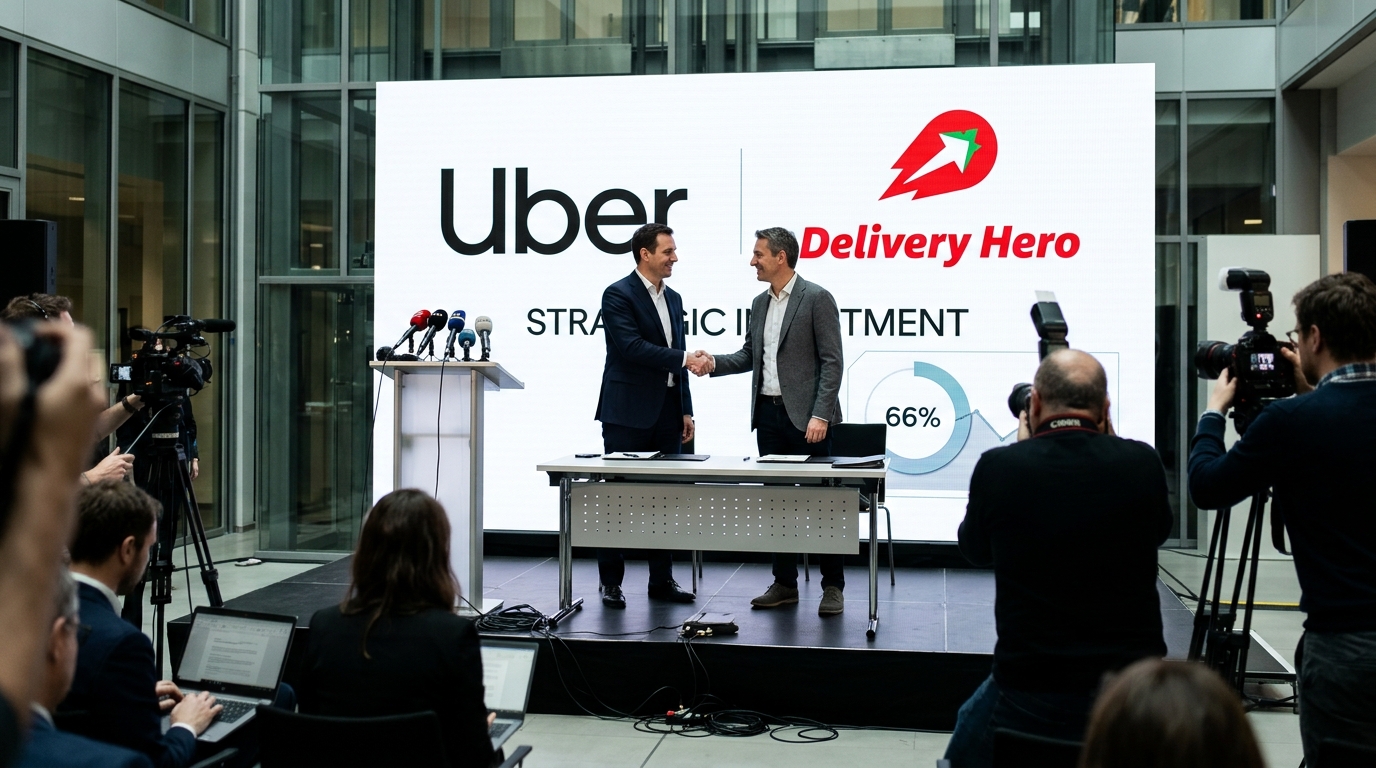
Uber's acquisition of Delivery Hero reshapes global food delivery. Learn how data intelligence helps executives navigate this market consolidation.
Uber has successfully secured a 66.56% stake in Germany’s Delivery Hero, marking a significant shift in the global food delivery landscape. This majority position allows Uber to expand its reach across Asia, Southern Europe, and the Middle East through established brands like Foodora.
The deal represents one of the largest consolidations in the history of the delivery sector. While Delivery Hero is headquartered in Berlin, it no longer operates in Germany. Instead, it holds a massive footprint in high-growth markets where Uber has faced stiff competition. By acquiring this stake, Uber is effectively buying its way into dominant positions in dozens of new countries. The takeover is expected to fully close in the second half of 2027, following regulatory approvals and merger clearances.
For C-level executives at rival platforms and restaurant chains, this news is a signal that the era of fragmented markets is ending. Uber is moving toward a global monopoly-like structure in several regions. This shift creates a massive challenge for local players. When two giants merge their data and logistics networks, they gain an unfair advantage in predicting consumer behavior and optimizing delivery routes. Understanding the competitive impact of such a merger requires more than just reading financial statements. It requires granular, real-time data on how these companies are performing in specific cities and neighborhoods.
This is where data intelligence becomes vital. Without automated tracking, it is nearly impossible to see how a merger of this scale changes the actual availability of couriers or the concentration of restaurant partners. Manual observation cannot keep up with the millions of daily changes across multiple continents. To stay ahead, businesses must use sophisticated tools to monitor how their competitors are shifting their resources and capturing new customers.
The Strategic Path Forward
As Uber integrates Delivery Hero’s assets, the competitive pressure on independent chains and other delivery platforms will intensify. Executives must now prioritize a data-driven approach to defend their territories. It is no longer enough to react to market changes after they appear in quarterly reports. You need to see the shift as it happens.
To accurately assess the changing landscape, leadership teams should consistently use Market Share Benchmarking to track how this consolidation impacts their specific regions. By analyzing real-time data on restaurant coverage and user activity, you can identify where the Uber-Delivery Hero entity is strongest and where they are leaving gaps for you to fill.
The next two years will be a period of intense transition. Those who rely on outdated information will find themselves squeezed out of the market. Those who use intelligence to map the new reality will find the opportunities that consolidation always leaves behind.
If you need deeper insights into how these market shifts affect your specific business goals, please reach out to our team at DoubleData Contact.
Source: https://finance.yahoo.com/markets/stocks/articles/uber-secures-two-thirds-stake-154825217.html
