- Data analytics
Uber Delivery Growth Fuels Sector Rally Amid Shifting Market Shares
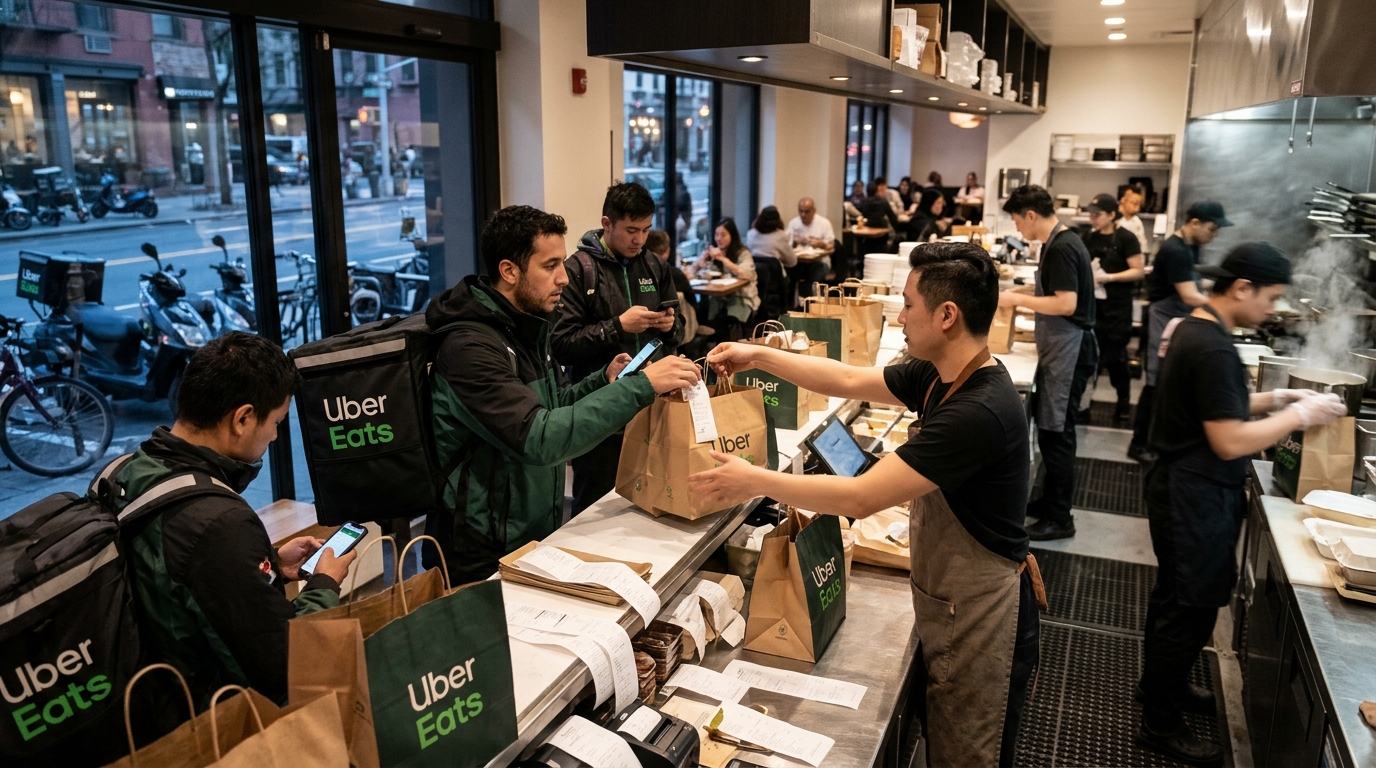
Uber's delivery bookings jumped 22%, lifting the whole sector. Learn how the shift toward grocery and retail is reshaping the food delivery landscape.
Uber’s 22% jump in delivery bookings has triggered a significant rally across the ride-hailing and food delivery markets. While the company issued a cautious profit outlook due to international headwinds, the strength in its delivery and grocery segments shows where the real competitive pressure is moving.
Uber’s recent report reveals a striking divergence in the current market. While ride-hailing bookings faced pressure from high fuel prices and driver supply issues in international markets, the delivery arm outperformed expectations. This shift explains why DoorDash, which focuses exclusively on delivery, saw its stock rise in sympathy. The investment community is increasingly valuing the resilience of delivery services over the volatility of mobility in the current economic climate.
The landscape is also consolidating rapidly. DoorDash recently announced an agreement to acquire Instacart parent Maplebear, a move that signals a deeper push into the grocery sector. Uber is keeping pace, noting that its own grocery and retail business is now operating at a $15 billion annual rate and growing 40% year over year. These platforms are no longer just fighting for restaurant orders. They are now competing for the entire household shopping basket, which changes the scale of data intelligence required to stay competitive.
For executives, these high-level growth figures hide the real complexity of the ground game. Manual tracking of regional performance is impossible at this scale. Data intelligence allows companies to see which regions are driving this growth and where competitors are successfully capturing new merchant types. Without a granular view, a 22% growth rate is just a number. With proper data, it becomes a roadmap for expansion and a way to identify where rivals are gaining or losing ground.
Mastering the New Competitive Landscape
Success in the coming years will depend on how well platforms understand their relative position across specific urban centers. As DoorDash integrates Instacart and Uber pushes further into retail, the lines between food delivery and general logistics will continue to blur. Companies must move beyond looking at their own internal metrics to understand their standing against rivals who are expanding their reach. Decision-makers can gain a clearer view of these shifts by using Market Share Benchmarking to track how volume and merchant coverage are shifting in real-time across different regions.
If you need deeper insights into how these market shifts affect your specific operations, contact our experts today at DoubleData Contact.
Source: 24/7 Wall St.
