- Data analytics
Swiggy shuts its 10-minute food delivery app Snacc over unit economics
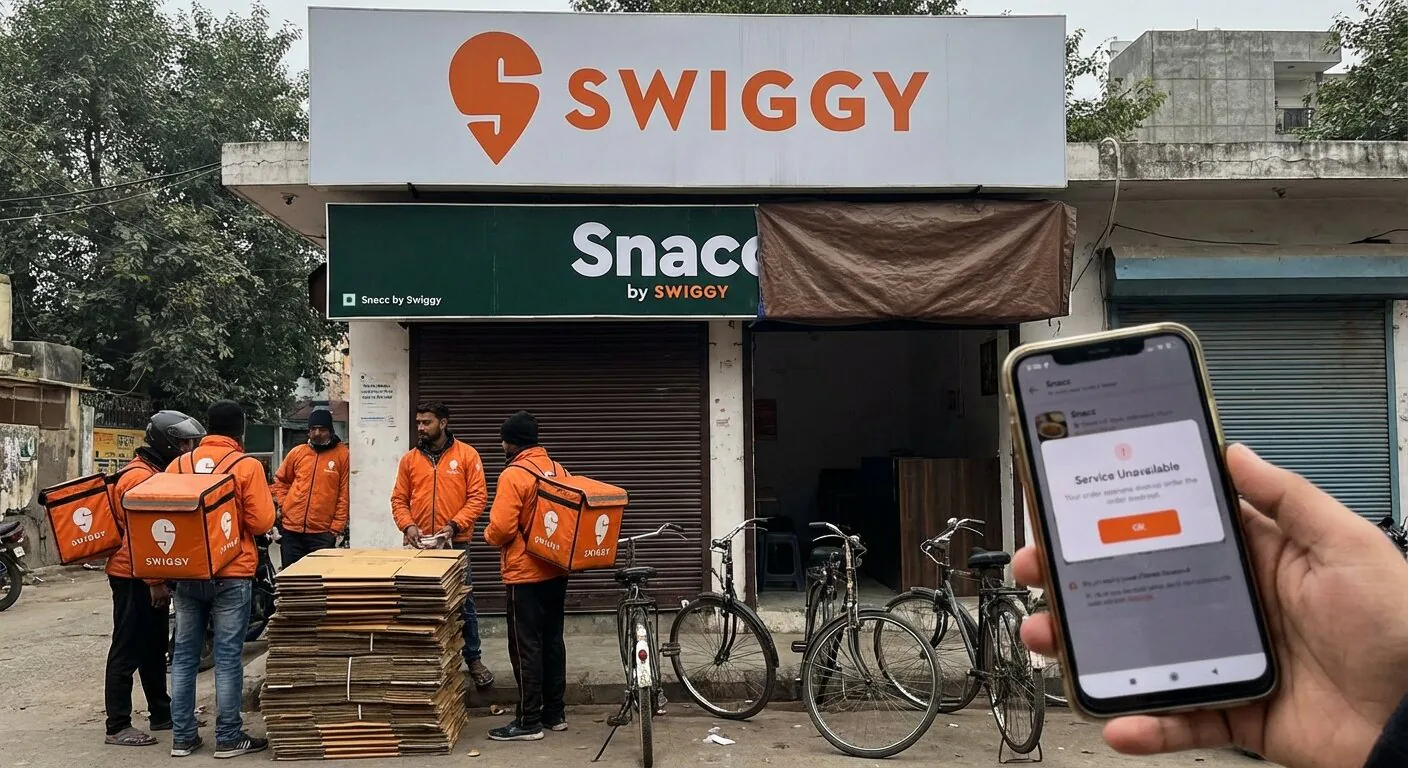
Swiggy closes its 10-minute app Snacc due to profit pressures. Learn why unit economics and MOV trends are deciding the future of ultra-fast delivery.
Swiggy has closed its 10-minute food delivery experiment, Snacc, citing unsustainable unit economics and profit pressures. Major players in the Indian market are moving away from speed at all costs and toward long-term value and scalable growth.
Snacc closed after nearly a year of operation. Swiggy noted that a product-market fit was emerging, but the broader financial reality made scaling impossible. Other players have pulled back too: Zomato previously shut its 15-minute service, and Zepto has scaled back its cafe operations due to sourcing challenges and staffing shortages. The primary hurdle remains the high cost of rapid logistics paired with small basket sizes.
Profit in food delivery is often a game of cents. Platforms must balance delivery speed against the average amount a customer spends, and if the cost to deliver a snack in 10 minutes exceeds the margin on that snack, the model is fundamentally broken. Many companies struggle to see these cracks until they have already burned through significant capital.
Internal reports often miss the external context of what the competition is doing to stay afloat. A competitor might be quietly raising its order thresholds to improve margins, and without granular tracking, a business might continue to offer low-threshold deliveries, losing money while the rest of the market pivots to more sustainable models. Data shows whether a low-margin strategy is a temporary customer acquisition tactic or a permanent financial drain.
Order thresholds decide whether fast delivery pays
Rationalization has started across the industry, and efficiency now matters more than being the fastest in the neighborhood. Growth numbers alone do not show the structural health of a delivery zone. Speed is a powerful marketing tool, but it cannot come at the expense of the company's survival.
Minimum Order Value (MOV) Trends across different regions show whether your pricing strategy is sustainable compared to the rest of the market. The data helps you decide whether to push for faster times or protect your bottom line by adjusting order requirements, and benchmarking these thresholds aligns your operations with the actual spending power of your customers in specific cities.
If minimum order values on your platform look out of line with competitors in some cities, contact our team today at DoubleData to compare them.
