- Data analytics
Seattle pay law lifts base rates past $12 as driver earnings stall
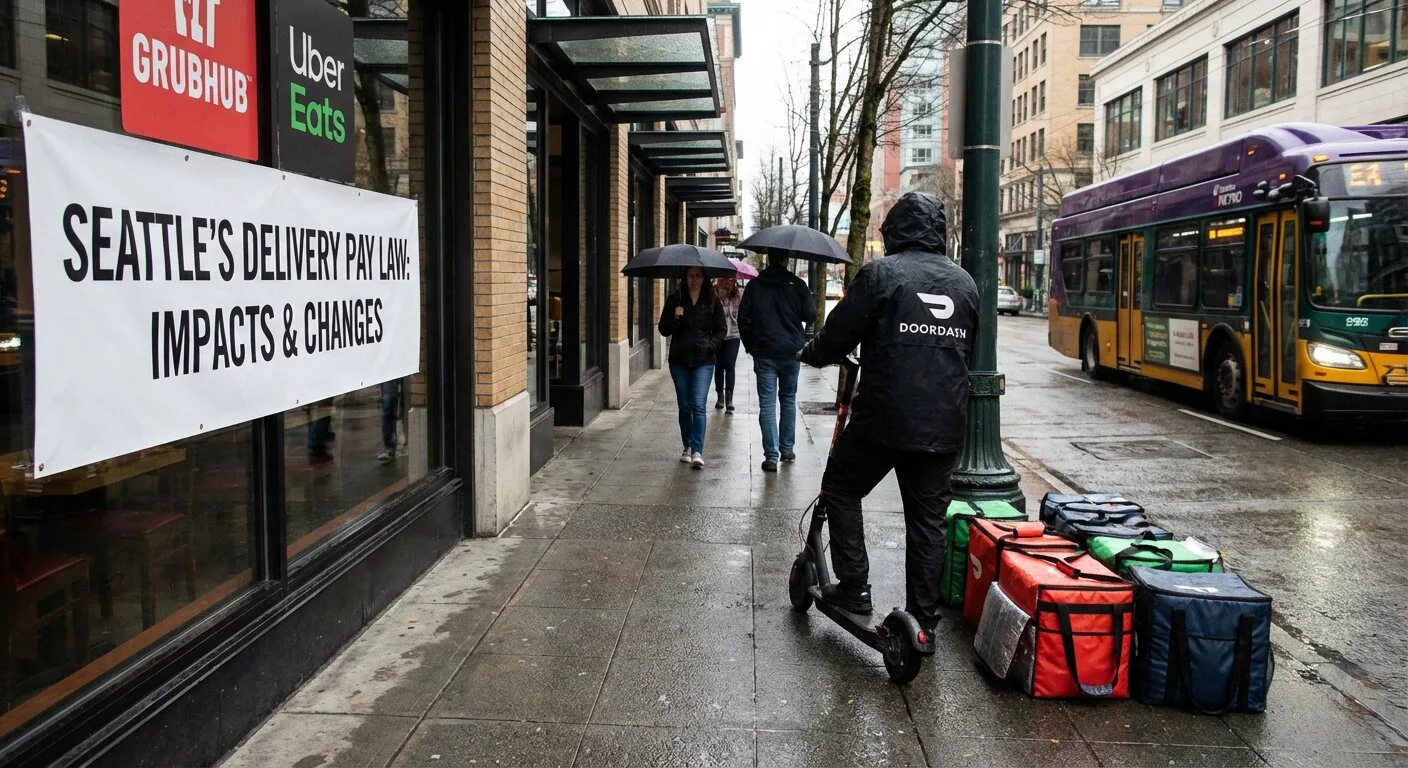
Seattle's delivery pay law more than doubled base rates, yet consumer fees rose, tips fell and monthly driver earnings stalled. What the data showed.
Seattle's attempt to guarantee higher earnings for delivery drivers left monthly pay stagnant even though base rates more than doubled. New data shows that higher consumer fees and a surge in driver competition canceled out the policy's intended benefits.
In early 2024, Seattle implemented a law requiring delivery apps to pay drivers a minimum rate for every task, setting a floor of roughly $5 per delivery that combines per-minute and per-mile compensation. On the surface, the policy worked: base pay per delivery jumped from $5 to over $12. The broader market, however, responded in ways that hurt the very people the law intended to help, and total monthly earnings for drivers barely moved as the market adjusted to the new cost structure.
The first shift came at the checkout screen. To cover the higher labor costs, platforms like DoorDash introduced a $5 regulatory response fee for orders in Seattle. High fees usually lead customers to order less often or to reduce their tips, and in Seattle both happened. Tips typically make up a massive portion of a driver's income, yet tipping fell sharply after the law took effect, and some platforms even removed the option to tip at the time of checkout, further suppressing driver income.
Uber Eats responded the same way, adding the $5 regulatory response fee to orders in the city, according to The Conversation.
Market saturation was the second shift. Higher guaranteed pay per task made the work more attractive to new drivers, and because gig platforms have few barriers to entry, more people logged on to the apps to compete for a shrinking pool of orders. Data shows that drivers stayed online for the same amount of time but spent significantly more of that time waiting. Wait times between tasks nearly doubled, and the number of completed deliveries per driver fell by up to 30%.
Drivers were also forced to travel farther between deliveries to find work, according to The Conversation.
A pay floor moves fees, tips and idle time at once
Unlike traditional employment, where a higher minimum wage might lead to fewer jobs but higher pay for those who stay, the gig economy is a fluid market. A change in one area, such as a pay floor, immediately triggers changes in consumer fees and driver behavior. Without a complete view of how these variables interact, a policy can turn into a zero-sum game where higher per-task rates are eaten up by longer idle times and lower tips.
Seattle shows that pricing is the most sensitive lever in food delivery. When a city introduces new regulations, platforms must react quickly to protect their margins without alienating customers, and that takes a granular view of the total cost to the consumer as well as menu prices. Operators that analyze delivery fees and fee structures across different regions can predict how demand will shift and adjust marketing and operations before a policy change erodes their market share.
For more information on how to optimize your platform's strategy and navigate complex market data, please contact our team at DoubleData.
Source: The Conversation - Seattle Delivery Pay Study, theconversation.com
