- Data analytics
Olo Disrupts the Delivery Market by Aggregating Fees and Menu Pricing
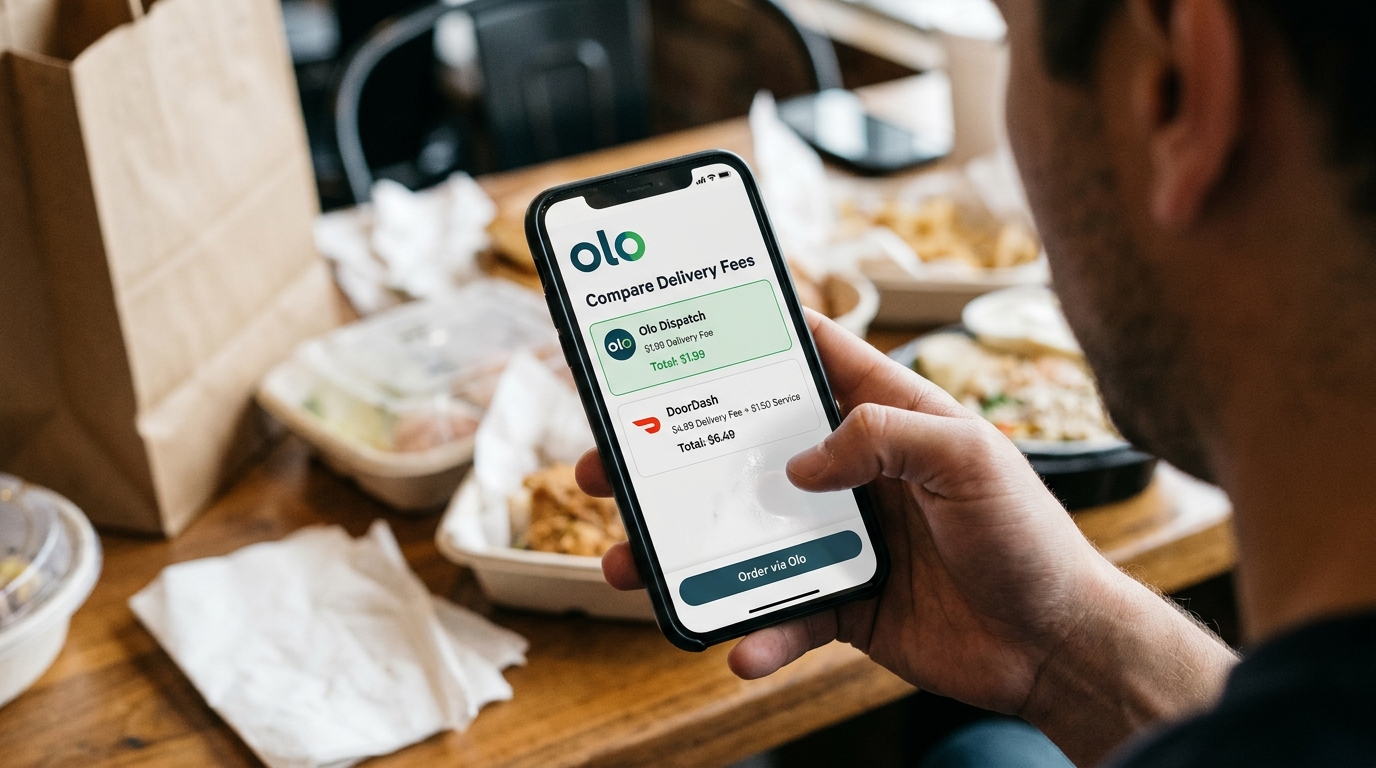
Olo launches a new app to compare delivery fees across 27 providers, saving users up to 30% by eliminating menu markups and optimizing courier costs.
Olo is launching a new consumer app that leverages drivers from DoorDash and Uber Eats while bypassing their traditional menu markups. By comparing delivery costs across 27 different providers, Olo aims to offer a cheaper alternative for diners and higher margins for restaurant brands.
Olo has long been the silent engine behind the digital ordering systems of major chains like Five Guys and Panda Express. For years, the company operated as a backend service, much like Shopify does for e-commerce. Now, the company is moving directly into the consumer space. The new app allows users to order from approximately 800 restaurant brands, but with a significant twist: it uses the delivery infrastructure of its competitors to fulfill the orders.
The strategy centers on price transparency and cost optimization. When a customer places an order, the platform analyzes which delivery service (such as DoorDash, Uber, or Grubhub) offers the best rate at that specific moment. Because Olo does not mark up menu prices, it claims customers can save between 15% and 30% compared to ordering directly through a third-party aggregator. This approach tackles a growing frustration among consumers who are increasingly sensitive to the hidden costs of food delivery.
This shift represents a move toward delivery arbitrage. By acting as a thin layer on top of existing courier networks, Olo avoids the high overhead of managing a fleet of drivers while still capturing the customer relationship. The success of this model depends on the ability to process massive amounts of real-time pricing data across various platforms. Without granular intelligence on how these fees fluctuate based on time, distance, and demand, it is impossible to consistently offer the lowest price.
As the market evolves, data is also being used to prepare for a future dominated by AI agents. CEO Noah Glass believes that AI-driven ordering will become a major trend, where software decides where to buy food based on the best available price. In this environment, the platform with the most efficient logistics data will win the transaction. For restaurant executives, the challenge is no longer just about being present on delivery apps, but about understanding the complex fee structures that impact their bottom line.
Optimizing Margins through Granular Fee Intelligence
To remain competitive against this new wave of aggregation, platforms and restaurants must have a clear view of the market landscape. Relying on manual checks is no longer viable when competitors are using automated systems to find the cheapest delivery route in seconds. Businesses need to Analyze Delivery Fees across the entire industry to ensure their pricing remains attractive while protecting their margins.
Understanding how delivery costs are distributed across different zip codes and times of day allows brands to adjust their strategies dynamically. As Olo scales its new consumer platform, the importance of real-time data intelligence will only grow, making it the primary tool for anyone looking to challenge the current delivery giants.
To learn more about how data intelligence can help your business navigate the changing delivery landscape, please get in touch with our team: Contact Doubledata.
