- Data analytics
NYC's E-Bike Bill: Why Infrastructure Mandates Require Fleet Data Intelligence
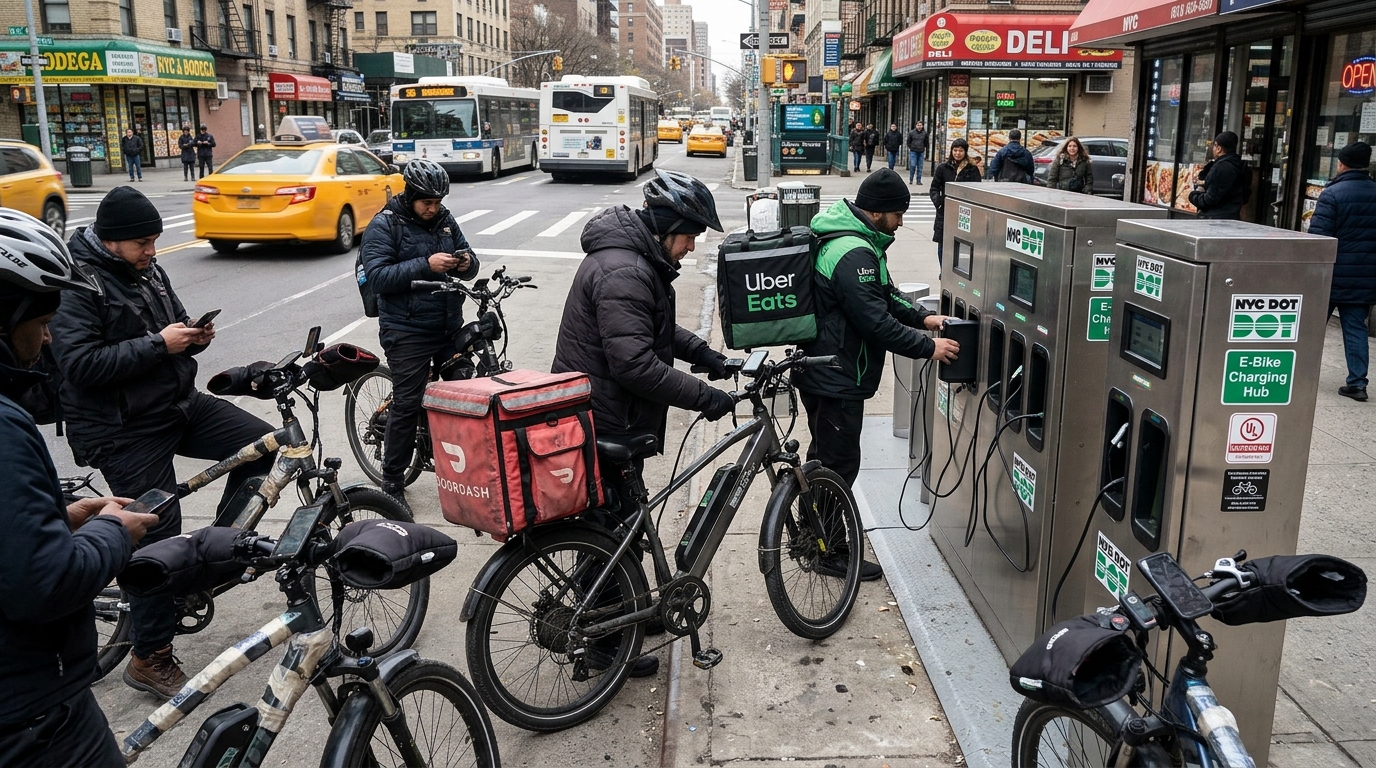
NYC's proposed bill requires delivery firms to fund e-bike hubs. Discover how fleet data intelligence helps navigate these new regulatory costs.
A new New York City bill aims to force food delivery platforms to pay for courier rest areas and e-bike charging stations. This legislative shift moves the burden of urban logistics infrastructure from the city budget directly onto the balance sheets of major delivery firms.
For years, the rapid growth of e-bike delivery has outpaced city planning. In neighborhoods like the East Village, hundreds of couriers congregate near mosques and parks while waiting for orders. This has led to local tension over sidewalk space, safety concerns, and a rise in lithium-ion battery fires. Until now, the city has attempted to solve these issues using taxpayer funds and small-scale pilot programs. However, Councilmember Harvey Epstein’s new proposal suggests a fundamental change in the business model. It argues that if a private company profits from a fleet of 80,000 riders, that company should be responsible for the physical space those riders occupy.
The bill would require companies like DoorDash, Uber Eats, and Grubhub to create dedicated rest areas. These hubs must include bathrooms, charging stations, and secure bike storage. For executives, this is not just a regulatory hurdle, it is a massive capital expenditure. Deciding where to build these hubs requires more than just looking at a map. Platforms need to understand exactly where their workers spend their downtime and where the highest demand for charging occurs during peak hours.
From a data perspective, the complexity lies in the movement of the fleet. Manual tracking or relying on outdated city surveys will not provide the precision needed to justify these investments. If a platform is forced to build a rest area, it must ensure that the location serves the highest density of its active couriers while potentially offering a competitive advantage over other services. Without granular intelligence, firms risk building expensive infrastructure in areas that do not actually solve the congestion problem or meet worker needs.
Strategic Planning for Physical Infrastructure
As delivery becomes a permanent fixture of urban life, the "invisible" nature of the workforce is disappearing. Regulators are demanding that digital platforms take physical responsibility for their operations. To navigate this, companies must move beyond simple order tracking and start looking at the broader movement of the delivery market. Leaders can stay ahead of these mandates and optimize their logistics footprint by choosing to Benchmark Competitor Fleet data to see where the market is truly concentrated.
Understanding these patterns allows platforms to negotiate better with the city and choose hub locations that maximize efficiency. Proactive data analysis is the only way to transform a new regulatory cost into a strategic logistics asset.
To learn more about how data intelligence can protect your margins and help you adapt to new urban regulations, contact our team of analysts today.
Source: Gothamist
