- Data analytics
NYC blizzard travel ban brings food delivery to a standstill
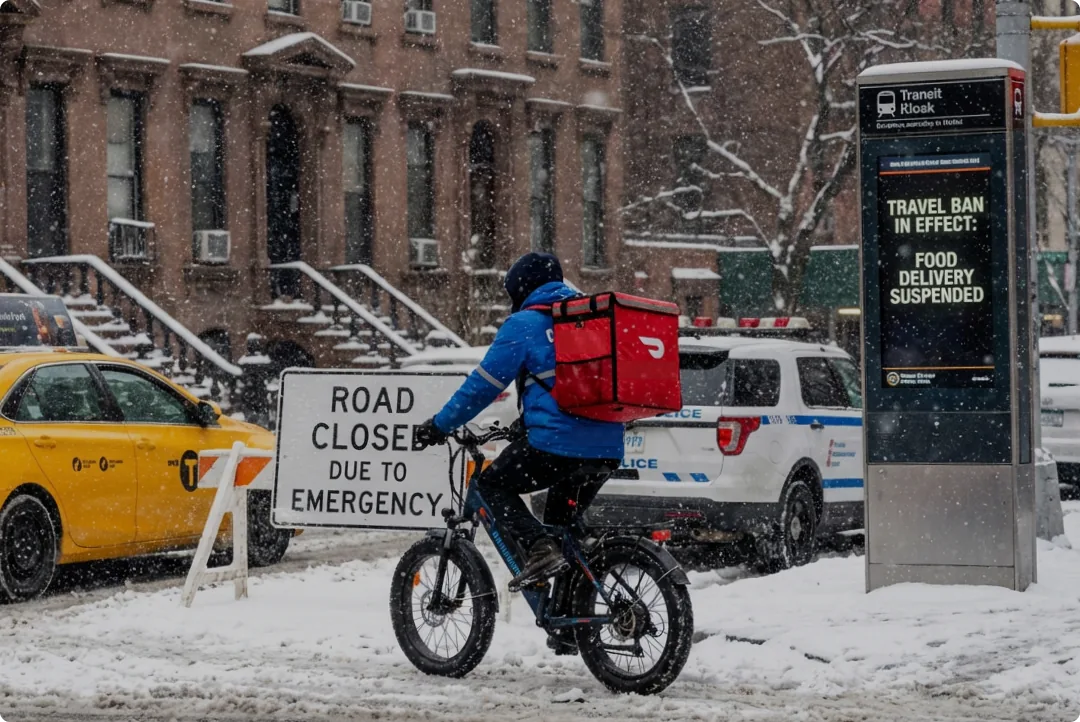
New York City's blizzard travel ban closed streets to cars, scooters and e-bikes from Sunday night to Monday noon. What it meant for restaurant uptime.
New York City has declared a state of emergency and a total travel ban starting Sunday night due to a historic blizzard. The ban effectively halts food delivery services across the five boroughs and leaves a massive operational gap for platforms, restaurant chains, and wholesale providers.
Mayor Zohran Mamdani announced that city streets, highways, and bridges will be closed to all non-essential vehicular traffic from 9 p.m. Sunday through noon Monday, including cars, trucks, scooters, and e-bikes. Food deliveries are exempt, yet the Mayor's direct appeal to residents was clear: "Cook for yourself and don't order food for deliveries that will endanger workers." Combined with whiteout conditions and record-breaking snowfall, the request brings the delivery economy in the nation's largest market to a temporary but total standstill.
Delivery platforms and QSR chains lose more than a single day of revenue. The harder problem is the "digital-to-physical" gap: when a citywide ban is enacted, apps must reflect reality instantly. A digital storefront that stays listed as "Open" while the physical infrastructure is frozen leads to a cascade of failed orders, frustrated customers, and safety risks for couriers who might feel pressured to navigate dangerous streets. Manual tracking of thousands of individual restaurant statuses during a storm is simply not possible for large-scale operations.
The "active closed" gap during a citywide ban
Availability data across the market becomes a safety and operational tool here. It shows exactly where the "active closed" gap is widest, which neighborhoods are complying with the ban, and which specific brands are struggling to update their digital status. Without this granular visibility, platforms face high refund costs and potential regulatory scrutiny regarding worker safety during state-declared emergencies.
Knowing which venues are truly online or offline improves communication with customers and makes forecasts more accurate for the recovery period once the ban lifts on Monday afternoon. As the climate produces more frequent "historic" events, urban delivery operators that pivot based on data are better placed to get through them.
Companies need their digital maps to match the physical world to keep trust and limit financial loss during weather emergencies, and proactive operators are replacing manual updates with automated systems. Restaurant Uptime Data shows the status of every location in a network and helps manage regional shutdowns.
If you want to see which venues in your network stay listed as open during the next citywide shutdown, contact DoubleData here: https://doubledata.com/about-us/contact
Source: https://www.newsweek.com/new-york-city-announces-travel-ban-due-to-blizzard-11563469
