- Data analytics
McDonald’s and Uber: How Loyalty Integration Reshapes Delivery Competition
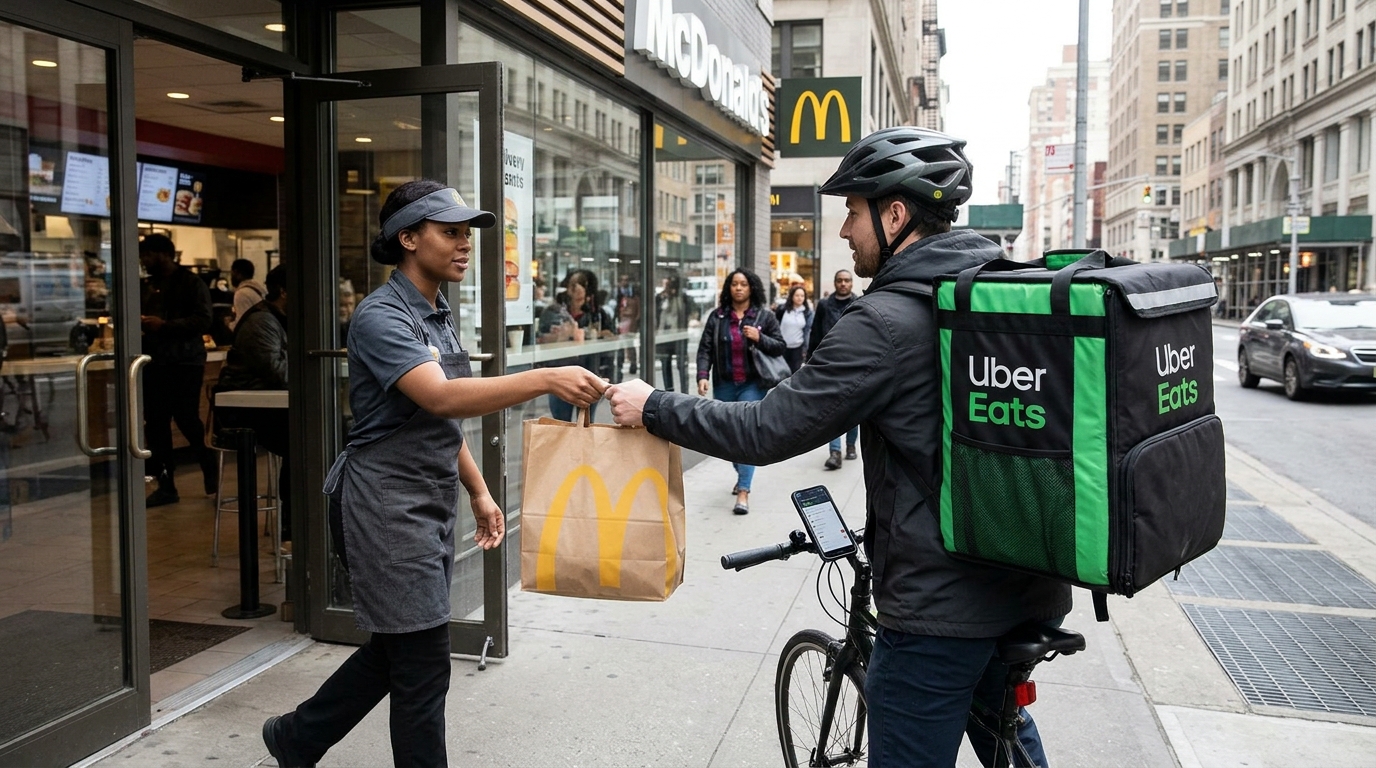
McDonald’s and Uber expand their partnership across 14 markets, integrating Uber Direct and MyMcDonald’s Rewards to drive $20bn in delivery sales.
McDonald’s and Uber have expanded their partnership across 14 international markets, integrating delivery fulfillment and loyalty rewards. This deal establishes Uber Direct as the preferred fulfillment partner for McDonald’s own mobile app, signaling a significant shift toward white-label logistics on a global scale.
The expansion covers major markets including the US, UK, Canada, Australia, and several European nations. By leveraging Uber Direct, McDonald’s maintains control over its customer data and the user experience within its own app. At the same time, it outsources the complex logistics of last-mile delivery to Uber’s existing driver network. This is a critical move for a delivery business that now generates over $20 billion in annual revenue.
The most significant part of the deal is the loyalty integration. MyMcDonald’s Rewards members can now earn and redeem points for Uber rides and delivery services. This creates a powerful ecosystem that keeps consumers engaged with both brands. It is no longer just about the food. Instead, it is about the total convenience and value offered by the combined platform. When a customer can earn dinner points by taking a ride to work, the barrier to ordering becomes much lower.
From a data intelligence perspective, this partnership creates a challenge for competitors who only track third-party marketplaces. Because many of these transactions happen directly inside the McDonald’s app, standard marketplace data might not show the full picture of order volume or promotional depth. To understand the impact, businesses must look beyond simple delivery fees. They need to analyze how these cross-platform rewards change ordering habits and customer retention in specific regions.
Using Data to Counter Integrated Loyalty Models
As McDonald’s and Uber tighten their grip on the customer journey, other restaurant chains and delivery platforms must find ways to differentiate. The key is understanding the frequency and value of these cross-platform incentives. To protect your margins and market share, it is essential to analyze promotion activity to see how these loyalty schemes affect local ordering patterns in real-time. Identifying where these promotions are most aggressive allows you to adjust your own rewards and pricing strategies accordingly.
Ready to see how data can improve your delivery strategy? Contact our team of experts today to learn more about our data intelligence solutions.
Source: https://www.verdictfoodservice.com/news/mcdonalds-and-uber-expand-delivery-and-loyalty-tie-up/
