- Data analytics
McDonald's Switches In-App Delivery to Uber: A Strategic Shift in Market Power
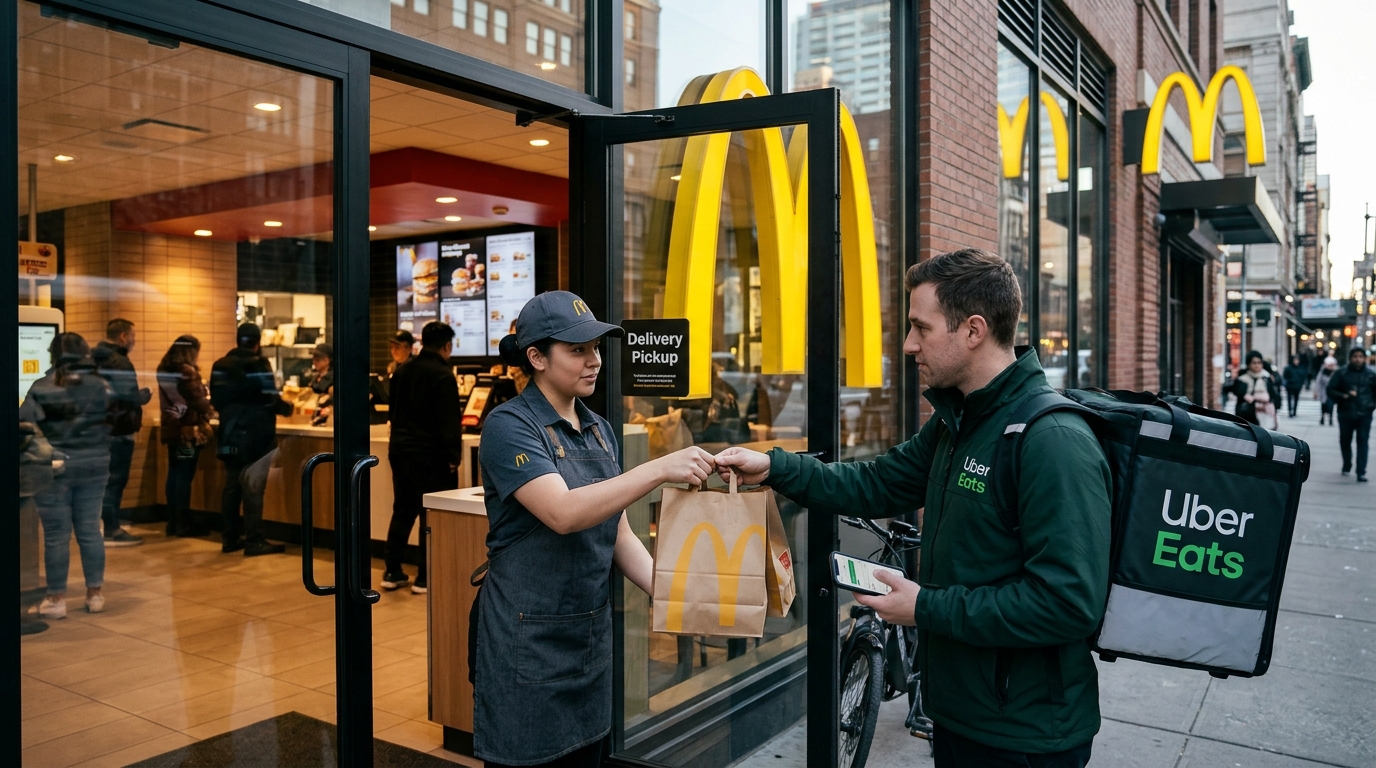
McDonald's partners with Uber for in-app delivery across 14 countries, shifting millions of orders away from DoorDash. Read the market impact for QSR leaders.
McDonald’s is moving its in-app delivery fulfillment from DoorDash to Uber across 14 global markets, including the United States and the United Kingdom. This strategic pivot affects over 45 million loyalty members and marks a significant shift in the competitive balance between delivery giants.
The partnership between McDonald's and Uber Technologies represents a major change for the Quick Service Restaurant (QSR) industry. For several years, DoorDash was a primary engine behind McDonald’s in-app delivery. Now, Uber will become the preferred delivery partner in key markets like the U.S., Canada, France, and Germany. This transition means that when a customer opens the McDonald's app to order a Big Mac, Uber Eats will be the service handling the delivery.
It is important to note that McDonald’s is not leaving DoorDash entirely. The fast-food chain will remain available on the DoorDash marketplace. However, the shift for in-app orders is a massive win for Uber. It gains direct access to a high-frequency stream of loyal customers who prefer ordering through the brand’s own channel. For DoorDash, this represents a significant downgrade in its relationship with one of the world's largest food brands.
From a data intelligence perspective, this shift is about more than just logistics. It is about who owns the customer journey and the fulfillment data. When a brand as large as McDonald’s shifts its primary traffic, it creates ripples across the entire delivery ecosystem. Regional market dynamics can change overnight. Without granular data, it is difficult to see how this affects local competition or delivery performance. For example, joint perks like discounted Uber rides for McDonald's customers could further lock users into the Uber ecosystem, making it harder for other platforms to compete on loyalty alone.
The Strategic Path Forward
To navigate this evolving landscape, restaurant leaders and delivery platforms must look beyond the headlines. Understanding how these massive partnerships shift the balance of power requires localized insights into how orders are being distributed. Executives can stay ahead of these shifts and protect their own positions by using Market Share Benchmarking to track how preferred partnerships impact actual delivery volumes in real-time.
As the lines between food delivery, transportation, and loyalty programs continue to blur, having the right data is the only way to ensure your strategy remains competitive. Monitoring these changes helps brands identify where they are losing ground and where new gaps are opening up in the market.
To learn more about how data can help you track delivery market shifts, contact our team today at DoubleData.
Source: https://sporked.com/article/your-next-mcdonalds-app-delivery-wont-come-from-doordash/
