- Data analytics
Luckin Coffee’s Record Profit: A Victory for Margins or a Warning for Growth?
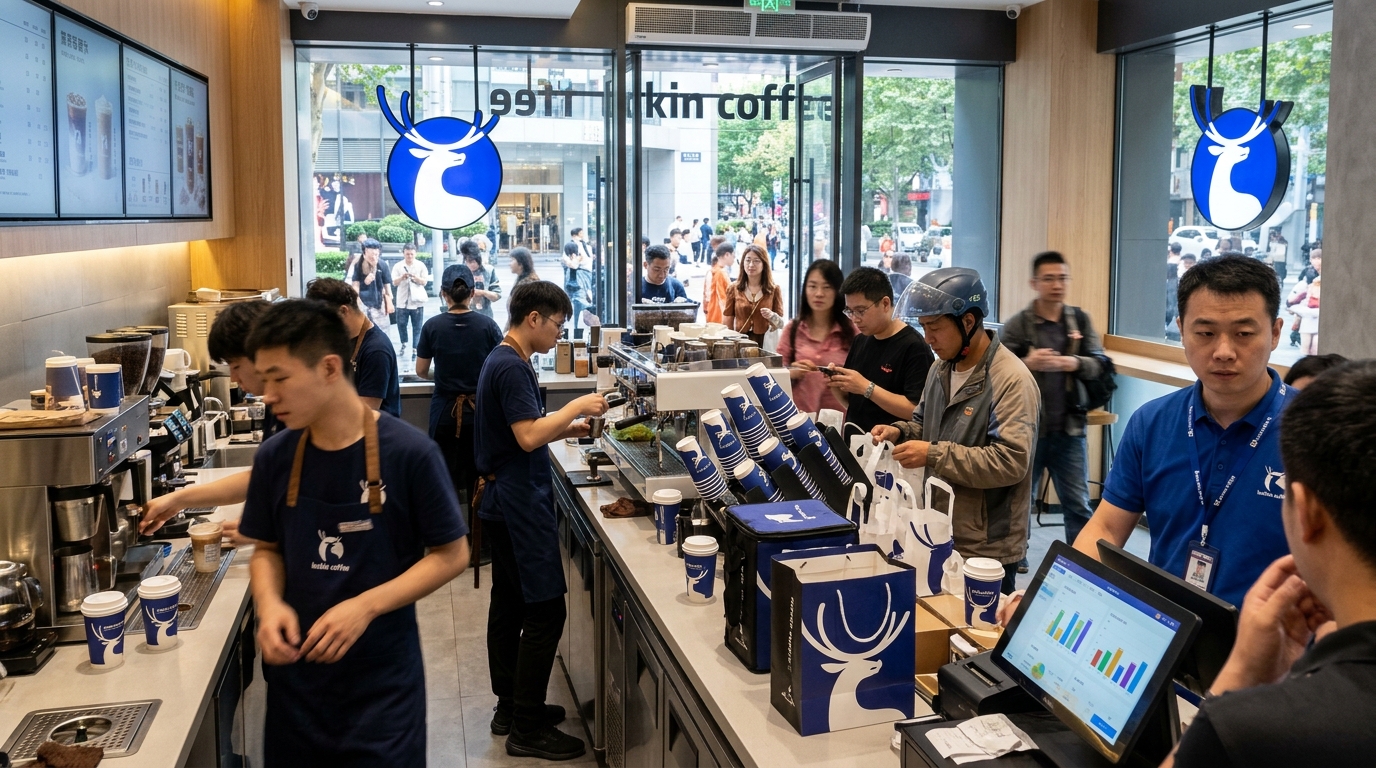
Luckin Coffee hits record profits by slashing delivery costs, but same-store sales continue to slide. Learn why market saturation is the next big challenge.
Luckin Coffee achieved a record-breaking 2.145 billion yuan net profit in Q3, largely driven by a massive reduction in delivery expenses. However, a third consecutive quarter of declining same-store sales suggests that rapid expansion is starting to cannibalize existing locations.
The financial results from Luckin Coffee present a fascinating paradox. On one hand, the company is more profitable than ever, with net revenue climbing 17% and operating margins reaching 23.3%. On the other hand, same-store sales at self-operated locations fell by 11.1%. This is the steepest drop yet, widening from previous quarters. This divergence tells us that Luckin is currently growing through corporate-level cost optimization rather than organic demand growth at the individual store level.
The primary driver for this profit surge was the delivery-fee gap. Last year, Luckin was locked in a costly subsidy war with platforms, spending nearly 19% of its revenue on delivery. This year, as those subsidies faded and customers shifted toward pickup, delivery expenses dropped to just 10% of revenue. This shift alone saved the company 1.1 billion yuan. While this provides a healthy boost today, it is a one-time structural gain. By 2027, this comparison base will normalize, and profit growth will once again depend on store-level performance.
Another factor putting pressure on margins is store density. Luckin added over 2,500 stores in just three months, bringing its global total to nearly 39,000. While this helps the brand dominate the grab-and-go coffee market, it also leads to store dilution. When new stores open too close to existing ones, they often split the same customer base rather than finding new ones. This trend is further complicated by new competitors, such as tea chains Guming and Mixue Bingcheng, which are now installing coffee machines in thousands of their own locations.
Navigating the Tipping Point of Market Density
For executives in the QSR and food delivery space, the Luckin story is a lesson in the importance of granular location intelligence. Relying solely on total revenue can hide the fact that individual store health is declining. To maintain long-term profitability, brands must look beyond simple expansion and instead focus on the specific dynamics of each neighborhood. Understanding exactly where your competitors are and how many stores a specific area can support is the only way to prevent self-cannibalization. To master these dynamics, leading chains are now using advanced tools to Track Market Saturation and optimize their footprint based on real-time data.
If you need help analyzing your competitive landscape or optimizing your delivery costs with high-frequency data, reach out to our team at DoubleData Contact.
Source: https://finance.biggo.com/news/ad63a399-adff-4385-b8c0-ec4aa4f602d0
