- Data analytics
India’s quick commerce surge: managing profitability through order values
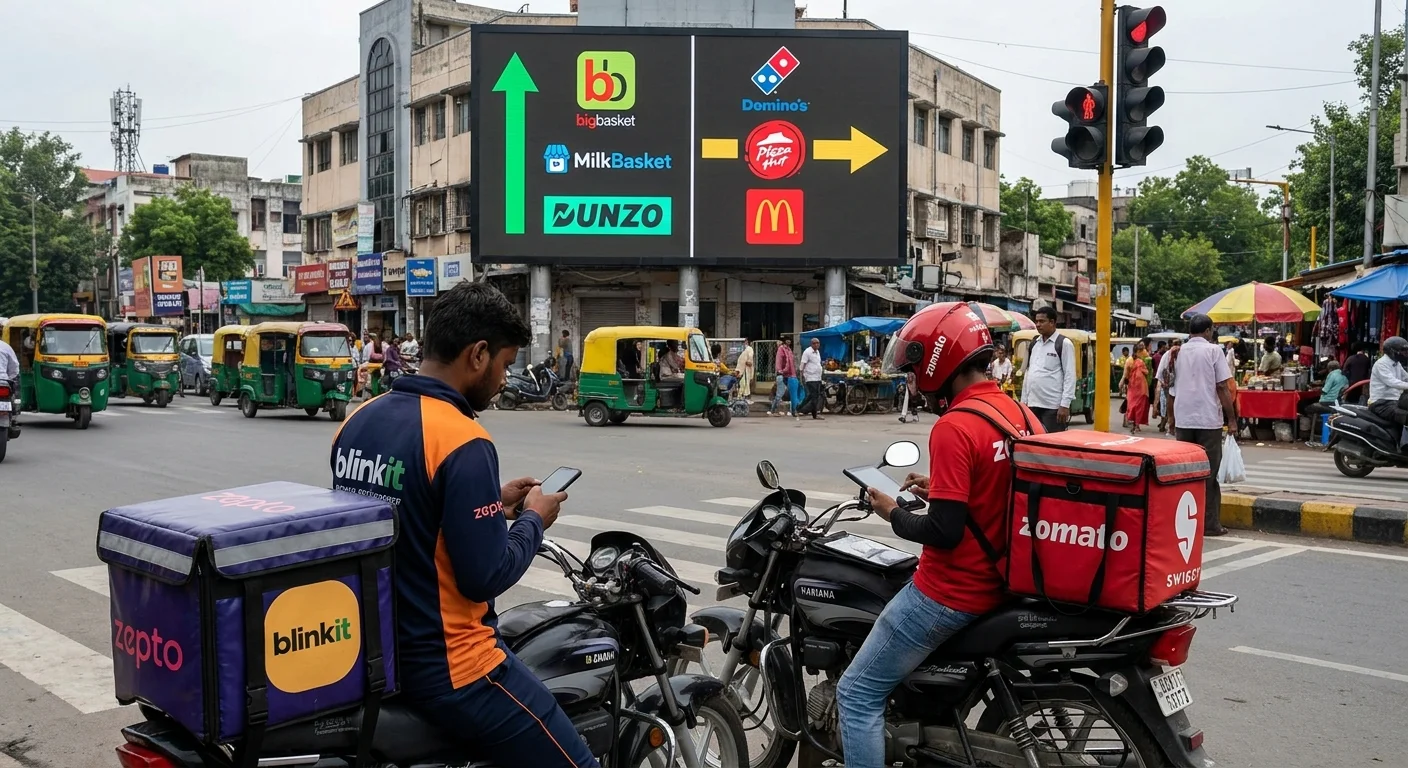
India's quick commerce is set for a 21.6% surge while food delivery holds steady. Learn how shifting order values are redefining the festive season market.
India’s quick commerce sector is set for a significant 21.6 percent growth surge this quarter, outperforming the steady 18 percent growth seen in food delivery. As platforms prioritize profitability by raising order thresholds and reducing discounts, the competition for the upcoming festive season is reaching a fever pitch.
The recent report by Emkay highlights a critical shift in the Indian digital landscape. Quick commerce is moving away from pure customer acquisition and toward a phase of consolidation and efficiency. Leading platforms are no longer just focused on delivery speed. They are now focusing on the quality of the order. By increasing minimum order values (MOV) and cutting back on aggressive discounting, these companies are shifting demand toward a more sustainable and profitable model.
This evolution suggests that the market is maturing, but it also creates a complex environment for food delivery players. While food delivery maintains a steady momentum, it must now fight harder for a share of the household budget as quick commerce expands its reach into festive spending. This shift creates a "see-saw" effect where price-sensitive users migrate between platforms the moment a checkout fee or order minimum changes by even a small amount.
For C-level executives, the challenge is that these changes happen at a hyper-local level. A discount reduction in one city might not occur in another. Without granular data intelligence, it is difficult to determine if a loss in market share is due to internal pricing or a competitor's strategic shift in order requirements. Data intelligence sheds light on these invisible barriers, allowing brands to see exactly where competitors are tightening their requirements and where they are leaving gaps for others to step in.
Winning the festive season battle
To maintain momentum during the high-demand festive peak, platforms and restaurant chains must align their pricing with local consumer behavior. Monitoring these micro-shifts is the only way to protect margins without losing the customer base to a rival. Leaders can gain a competitive edge and refine their strategy by tracking Minimum Order Value (MOV) Trends to see exactly how competitors are adjusting their goalposts in real-time.
Staying ahead of the curve requires more than just following the trends. It requires the data to act on them before the competition does.
Ready to optimize your market positioning? Contact our team at DoubleData Contact to learn more.
Source: https://hospitality.economictimes.indiatimes.com/news/operations/food-and-beverages/indias-quick-commerce-growth-set-to-accelerate-food-delivery-to-remain-steady-report/134881791
