- Data analytics
iFood invests in Speedbird Aero to scale drone deliveries in Brazil
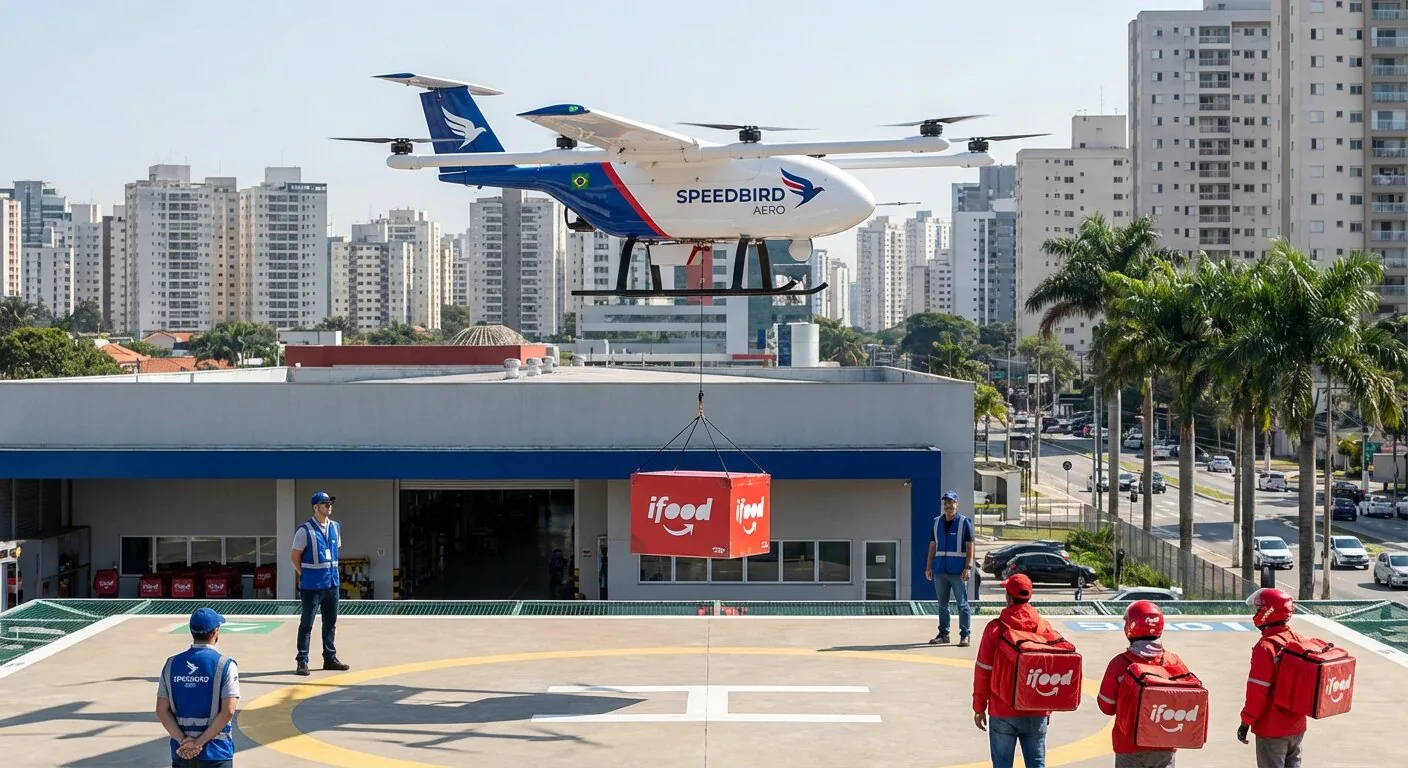
iFood invests in Speedbird Aero to scale drone logistics in Brazil. Learn how data intelligence helps benchmark delivery speed in this new era.
iFood has invested in Speedbird Aero to scale autonomous drone deliveries across Brazil, focusing on the dense São Paulo metropolitan area. The partnership targets 40 million annual deliveries and aims to bypass urban traffic and geographic barriers with hybrid logistics, where drones and couriers work together.
Speedbird Aero, a leader in unmanned aerial logistics, is currently the only company in Brazil certified to operate cargo flights beyond the pilot's line of sight. With the investment from iFood, Brazil's dominant food-delivery platform, it plans to expand its fleet and infrastructure and move drones from a niche experiment to a core component of the national supply chain. One of the first major routes will connect shopping centers to large residential complexes, cutting through the heavy traffic that often slows down motorcycle couriers.
The deal responds to the physical limits of traditional delivery in mega-cities, and it changes the competitive picture for restaurant chains and rival delivery platforms. When a drone handles the longest part of a journey and a courier completes the final few meters, the traditional math for delivery times no longer applies. Companies now have to analyze how these air-to-ground handoffs affect their overall service levels, beyond simple distance.
Manual tracking of delivery performance in a market this complex is impossible. Without granular data, businesses cannot see where they are losing ground to competitors who use aerial shortcuts. Measuring exactly how much time is saved on specific routes helps platforms decide where to invest in their own logistics upgrades, and it helps restaurants manage kitchen prep times more accurately so the food stays fresh on its way from the air to the customer's door.
Drones will shorten what customers call a fast delivery
As autonomous flight becomes a standard part of urban logistics, the baseline for what customers consider a "fast" delivery will inevitably shorten. Executives now need to measure the gap between their performance and the market leader's, the first step in protecting market share.
Delivery speed by zone is the number to watch. ETA Benchmarking shows how a platform's delivery speeds compare with the new standards set by autonomous logistics, across every zone it serves.
If you want to optimize your delivery intelligence, reach out to our team at DoubleData to discuss how our data solutions can fuel your growth: Contact us
Source: sUAS News
