- Data analytics
Why hotel room service is evolving to compete with food delivery giants
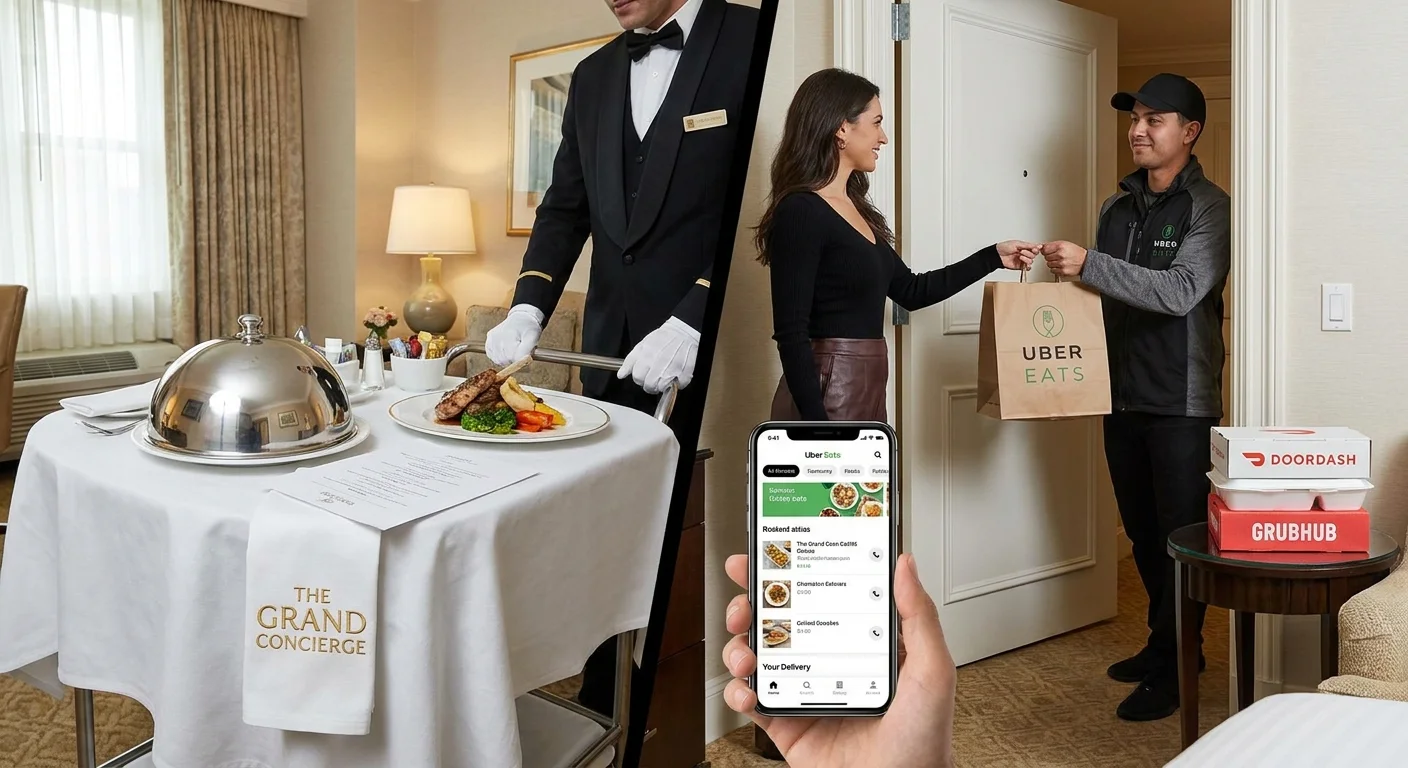
Hotels are rethinking room service to compete with Uber Eats and DoorDash. Learn how data-driven delivery models are reclaiming guest revenue.
Hotels are abandoning the traditional rolling table in favor of faster, app-based delivery models to match guest expectations set by Uber Eats and DoorDash. This shift aims to reduce labor costs while fixing the price gap that often drives guests to order from outside the building.
Room service has long been a staple of luxury hospitality, but it is often a loss leader due to high labor and operational costs. Today, guests prioritize speed and transparency over formal presentation. Waiting 45 minutes for a white-cloth service feels outdated when a local restaurant can deliver a hot burger to the lobby in half that time. The market is shifting from "dining as an event" to "dining as a convenience."
The real challenge for hotel operators lies in the delivery fee gap. When a hotel charges a 25% service fee for a meal prepared in the same building, guests naturally turn to their phones to find a cheaper alternative. To win back this revenue, hotels are adopting a delivery-first mindset. They are simplifying menus, using easier packaging, and offering mobile ordering that mirrors the user experience of major delivery platforms.
This transformation requires a deep understanding of the local market. Hotels are no longer just competing with the hotel next door. They are competing with every restaurant within a five-mile radius that appears on a guest's smartphone screen. Without granular data, it is difficult to know if your in-room dining prices are scaring guests away. Manual tracking of what the restaurant down the street charges is impossible at scale, yet that is exactly what guests do before they place an order.
Regaining margin control through market intelligence
To stay profitable, hotel food and beverage directors must ensure their pricing remains competitive with the external delivery ecosystem. Successful operators are moving away from flat percentages and toward data-driven models that reflect current market conditions. To understand how your costs compare to the apps your guests are using, you should Analyze Delivery Fees across your specific neighborhood. This level of insight allows you to price your service as the easiest choice without sacrificing your margins.
By treating in-room dining as a specialized delivery channel rather than a traditional restaurant service, hotels can lower their labor needs and increase order volume. The goal is to provide a seamless experience where the guest understands the total cost upfront and receives their meal while it is still fresh.
For more information on how to optimize your delivery strategy, please contact our team today.
