- Data analytics
DoorDash Acquires Instacart: The New Era of Delivery Consolidation and Data Dominance
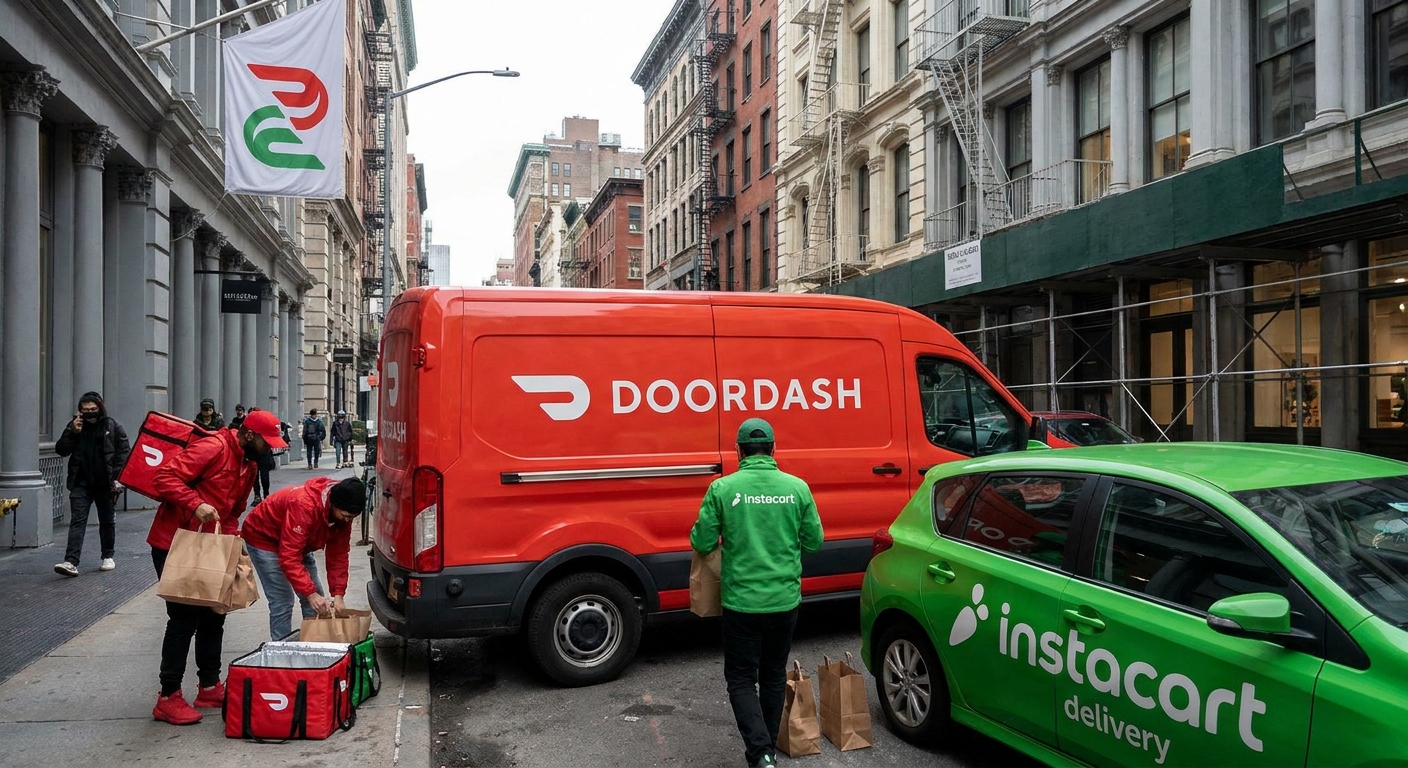
DoorDash’s $17B bid for Instacart signals a massive shift in quick commerce. See how consolidation affects Uber, Amazon, and your data strategy.
DoorDash’s $17 billion bid for Instacart is a massive move to control the U.S. quick commerce market. This merger would create a delivery giant with a 77% share of consumer spending, forcing competitors like Amazon and Uber to rethink their logistics and retail media strategies.
DoorDash’s decision to buy Instacart for $17 billion marks a turning point in the delivery industry. By joining forces, these two giants will control over three-quarters of all consumer spending on U.S. delivery platforms. This is not just a grab for more orders. It is a strategic move to defend against the growing shadow of Amazon. For years, DoorDash and Instacart operated in different lanes. DoorDash focused on restaurants, while Instacart dominated grocery delivery. Now, those lanes have merged into one high-speed race for the last mile.
The main driver behind this deal is the threat of Amazon. The e-commerce leader has recently launched Amazon Now, offering delivery in as little as 30 minutes in dozens of major cities. This encroaches directly on the territory DoorDash and Instacart have built. To counter this, DoorDash is positioning itself as a technology partner for local retailers. By using Instacart’s technology, local grocers can run their own websites and advertising networks. This creates a scaled alternative to Amazon for brands trying to reach customers online.
For executives at competing platforms or major restaurant chains, this consolidation makes market visibility much harder. When one entity controls 77% of the market, national averages become less useful. You need to know exactly where that dominance is strongest at a local level. Without granular, automated data, these shifts look like a single wave. In reality, the competitive pressure varies significantly from city to city. Relying on manual tracking or occasional reports is too slow when Amazon is expanding 30-minute delivery to hundreds of cities simultaneously.
Defending Your Position in a Consolidated Market
As the market consolidates, the winner-takes-most dynamic puts heavy pressure on margins and partner relationships. To remain competitive, businesses must move beyond high-level news and look at localized performance. You need to see exactly how this merger shifts the balance in your specific regions of operation. Understanding the true landscape requires high-frequency intelligence that captures every move your competitors make.
To protect your territory and identify growth opportunities, you can use Market Share Benchmarking to track how these industry shifts impact your footprint in real time. Staying ahead of a consolidated market requires more than just reacting to headlines. It requires the data to see where the next move is happening before it arrives.
Ready to see how the delivery landscape is shifting in your key markets? Contact our team today at Doubledata.
Source: https://www.modernretail.co/operations/what-doordashs-proposed-acquisition-of-instacart-means-for-uber-amazon-and-the-rest-of-the-quick-commerce-space/
