- Data analytics
The true cost of autonomous delivery: vandalism and the data gap
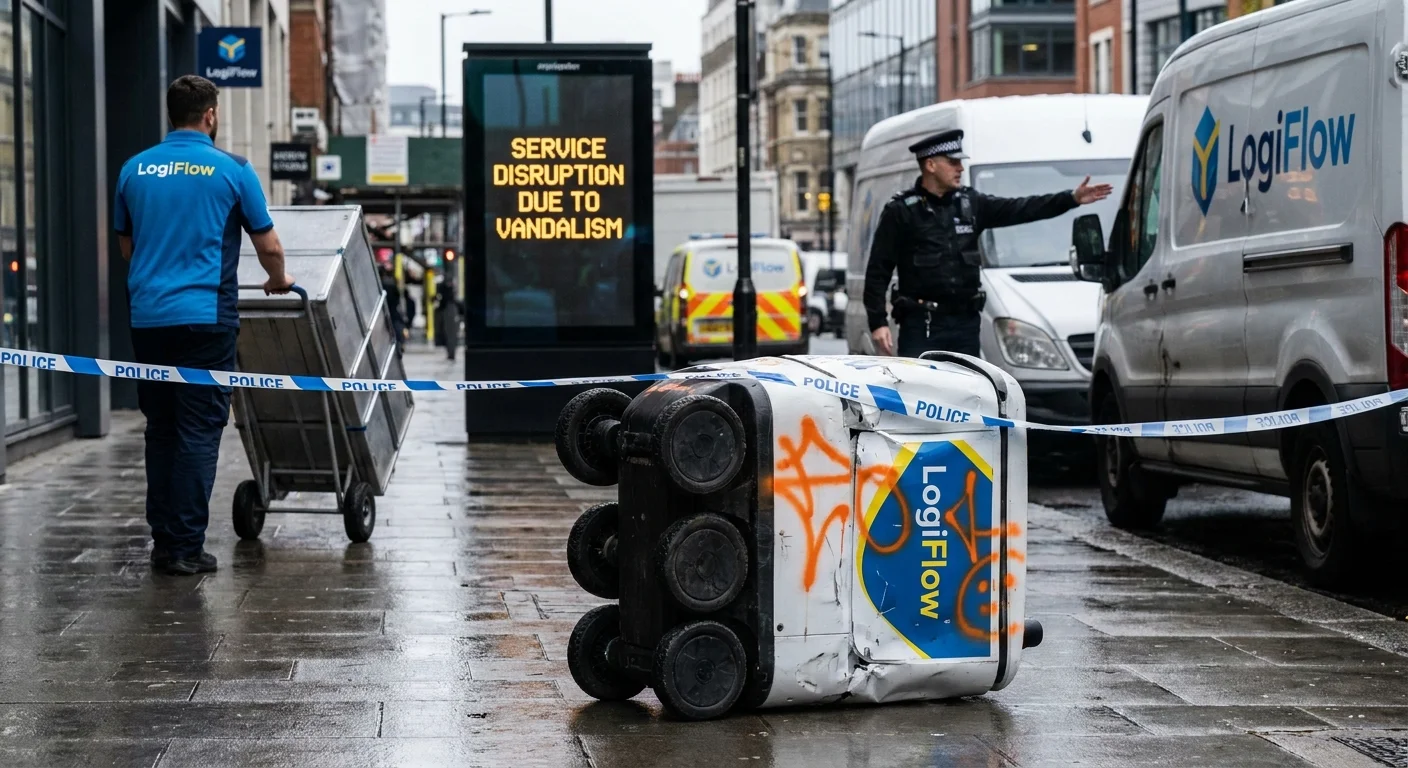
Food delivery robots face rising vandalism and public pushback. Learn how data intelligence helps leaders benchmark competitor fleet strategies.
Food delivery robots are currently facing a wave of public resistance, with machines being tipped, kicked, and vandalized in major cities across the United States. While tech giants continue to invest millions into autonomous last-mile solutions, this growing friction highlights a significant challenge for platforms trying to scale their delivery fleets.
In cities like Los Angeles, Philadelphia, and Miami, the presence of delivery robots has triggered a phenomenon known as "robophobia." These machines, designed to lower labor costs and improve efficiency, are instead becoming targets for pedestrians who feel frustrated by the rapid advancement of AI. Some residents see these robots as symbols of corporate overreach or threats to human jobs. Beyond the physical damage, some city councils are already moving to pause rollouts or restrict robots from high-traffic areas, citing safety and accessibility concerns.
From a business perspective, the stakes are high. The industry is expected to grow from 5,000 to 8,000 robots in the U.S. over the next three years, with a potential market value of 5 billion dollars. However, the current financial reality is stark. Top operators are still reporting massive losses (sometimes exceeding 100 million dollars annually) as they burn through capital to refine the technology. For a C-level executive, the core question is no longer just whether the technology works, but whether it can survive the environment it is intended to serve.
This is where data intelligence becomes vital. While a single vandalized robot makes for a viral video, the real strategic threat is the lack of visibility into competitor performance. Without granular data, it is difficult to tell if these incidents are isolated or if they are significantly impacting the reliability and uptime of a platform's delivery network. Understanding the density and success rate of these autonomous units compared to traditional human couriers is essential for any long-term expansion plan.
Strategic fleet management in a hostile environment
To navigate these operational hurdles, leaders must move beyond anecdotal evidence and look at hard numbers. The ability to monitor how different platforms are managing their delivery assets provides a clear competitive edge. By analyzing real-world deployment patterns, companies can identify which neighborhoods are receptive to automation and which ones pose too high a risk for hardware loss. To gain this level of insight, smart operators use specialized data tools to Benchmark Competitor Fleet performance across various urban markets. This approach allows brands to adjust their logistics strategy based on actual market penetration rather than optimistic projections.
The transition to autonomous delivery is a marathon, not a sprint. The platforms that succeed will be those that use data to balance technological innovation with societal acceptance and operational safety. Monitoring the competition's fleet health and deployment strategy is the only way to ensure your investment doesn't end up face-down on a sidewalk.
To learn more about how data intelligence can optimize your delivery network, please visit our contact page.
