- Data analytics
Serve and Coco robots crash into Chicago bus shelters hours apart
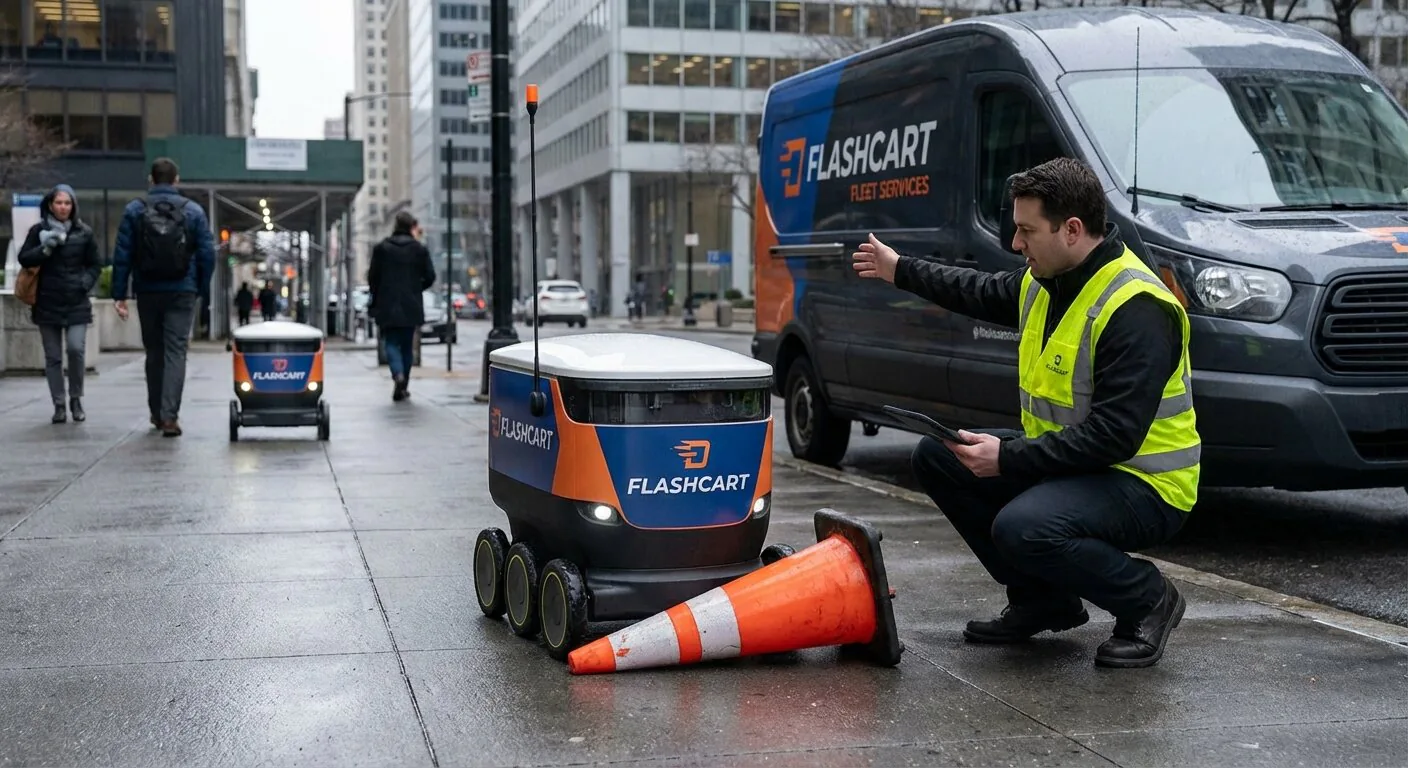
Analyze how robot delivery accidents in Chicago influence fleet management and the data needed to scale autonomous delivery safely.
Recent accidents involving Serve and Coco Robotics units in Chicago have exposed a major technical hurdle for automated delivery: detecting glass. The high-profile crashes are forcing food delivery executives to weigh the benefits of automation against the operational risks of unproven technology.
Within hours of each other, two delivery robots shattered glass bus shelters in Chicago. Industry experts point to a fundamental flaw in the navigation tech used by many autonomous units: LiDAR sensors often pass through clear glass or create reflections that confuse the robot, while stereo cameras struggle to calculate depth on transparent surfaces. A robot then simply does not "see" the obstacle until it is too late.
Demand for delivery robots remains high despite these dramatic failures. Restaurant owners face a persistent shortage of human drivers and are looking for ways to maintain delivery volumes. As the robots move from the early adopter phase to the mainstream market, the tolerance for technical glitches will drop, and regulators and the public are already questioning whether these machines are a genuine benefit or a sidewalk nuisance.
The data used to manage the technology matters as much as the technology itself. Anecdotal news reports are not enough to build a national strategy on. Performance data for different delivery methods across various urban environments shows where these technologies fail, which allows for better geofencing and safer route planning.
Failure data for geofencing and route planning
A delivery network that adds robots still needs strict operational oversight. Companies that scale automation can use detailed data to compare autonomous performance against traditional human-led fleets. If you are considering expanding your autonomous reach, you should benchmark competitor fleet performance to check that your logistics strategy is both efficient and safe.
If you want to compare how robot and courier fleets perform in your cities, get in touch with our team of analysts at DoubleData.
Source: The Food Institute
