- Data analytics
How China’s Drone Delivery Surge is Redefining Market Boundaries
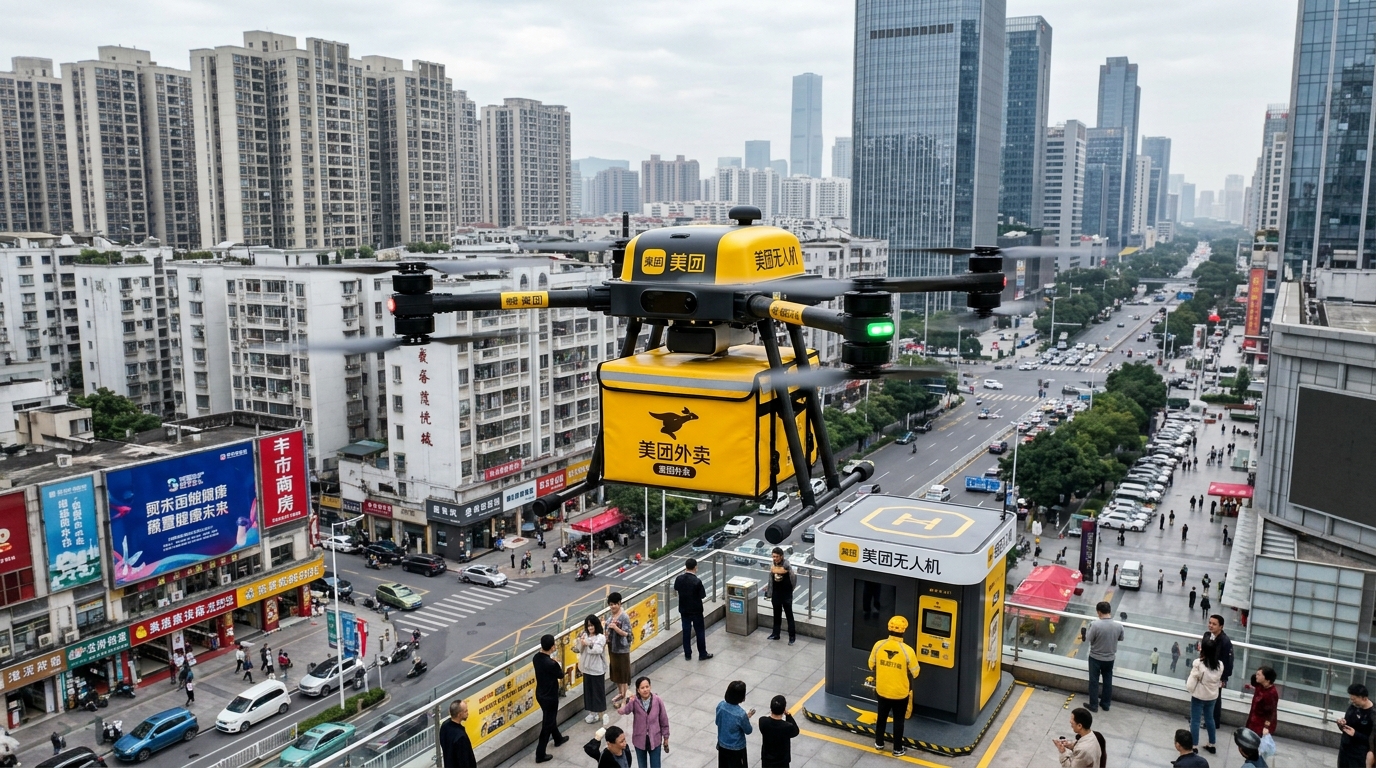
Shenzhen's drone delivery expansion shows how the low-altitude economy is unlocking new markets in parks and scenic spots. Learn the data impact.
The city of Shenzhen, a major technology hub in China, has officially integrated drone delivery into its urban landscape ahead of the APEC summit. By utilizing the low-altitude economy, platforms like Meituan are now delivering food and beverages to tourists in parks and scenic spots where traditional courier access was once limited.
The sound of drones is becoming a permanent fixture in Shenzhen’s skyline. As China expands its commercial drone logistics, the scale of operation is reaching unprecedented levels. By the end of 2025, over 3.2 million drones were registered in the country, with annual flight hours jumping by 70 percent. This growth is not merely about novelty. It represents a strategic shift in how delivery platforms manage logistics in difficult environments, such as crowded tourist areas or during periods of extreme weather.
For executives in the food delivery space, this development highlights a shift in the physical limits of the market. Historically, delivery zones were defined by where a moped could park and how far a driver could walk. In large parks or historic sites like the Great Wall, these limitations created significant gaps in service. Drones eliminate these barriers by creating direct air routes to specific landing pads, allowing platforms to capture orders that were previously impossible to fulfill.
From a data perspective, this expansion requires a new level of intelligence. Traditional mapping tools often fail to account for these new, non-traditional delivery points. Without granular data, it is difficult to measure the true potential of a city's \"low-altitude\" capacity. Market leaders are now using advanced data scraping and spatial analysis to identify these new pockets of demand. By analyzing where drone pads are being installed and which merchants are connected to them, companies can gain a clearer picture of how the competitive landscape is shifting.
Strategic Growth in the Low-Altitude Era
As delivery networks move into the sky, the primary challenge for competitors is understanding where the next boundary will break. The ability to deliver to a remote park bench or a mountain trail significantly increases the total number of potential customers. This technology turns \"dead zones\" into high-margin delivery hubs, but only for those who can accurately track this expansion.
To stay ahead of these shifts, firms must constantly evaluate their reach and identify where technology is opening new doors. Understanding the evolution of these zones is essential for long-term planning. To see how these changes affect your market reach, forward-thinking directors can Monitor TAM Growth to identify new revenue opportunities in real-time.
The drone delivery model in Shenzhen proves that the market is no longer flat. By leveraging data intelligence, platforms can navigate this three-dimensional economy and secure their position in the next generation of logistics.
For more insights on how data intelligence can optimize your delivery operations, get in touch with our team: Contact Doubledata
Source: The Star
