- Data analytics
California’s Medi-Cal Expansion: The Rising Multi-Million Dollar Market for Medically-Tailored Meals
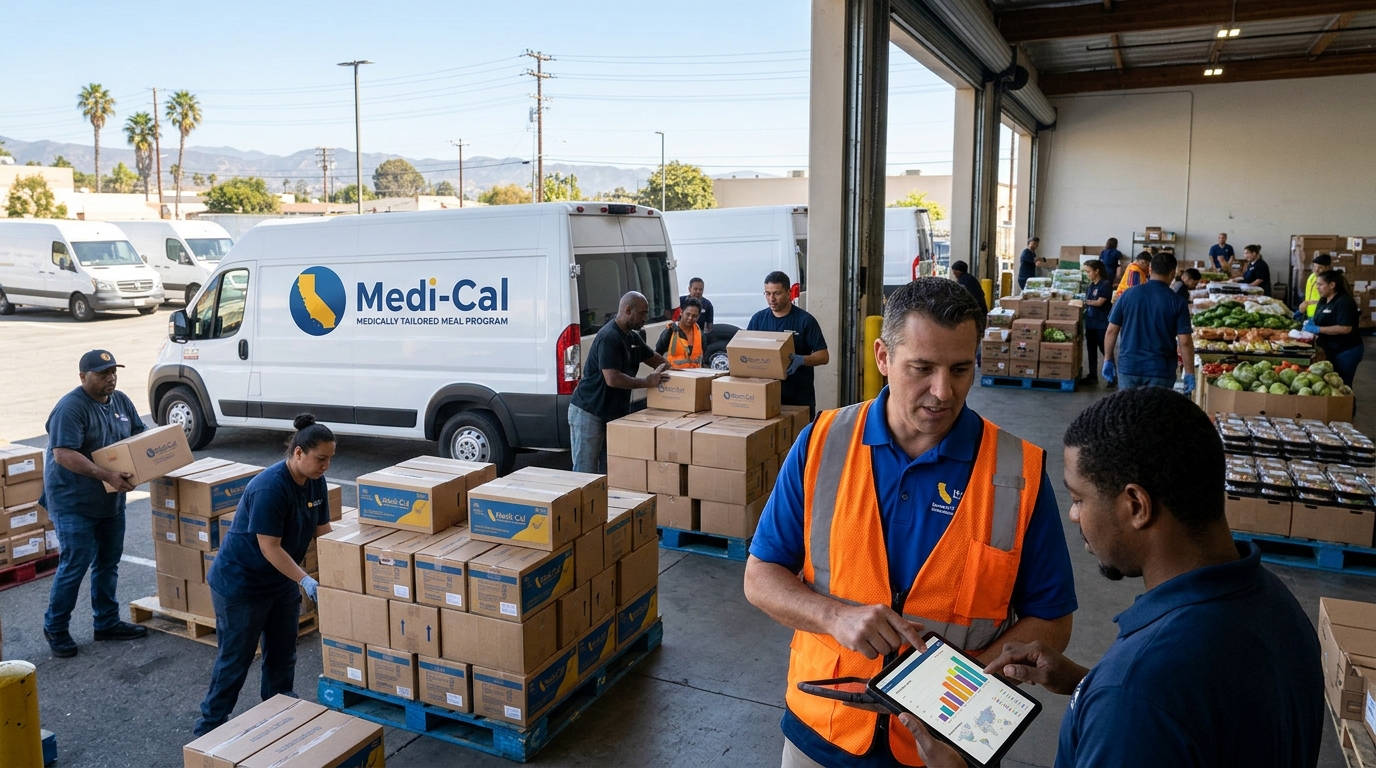
California's CalAIM program is spending millions on medically-tailored food. Discover how this shifts the TAM for food delivery and wholesale giants.
California is scaling up its CalAIM program, which now includes taxpayer-funded delivery of medically-tailored meals to hundreds of thousands of residents. This shift represents a massive expansion of the food delivery and wholesale market, turning healthcare spending into a significant revenue stream for logistics and food providers.
The California Department of Health Care Services is currently overseeing a major overhaul of how it supports low-income residents with chronic health conditions. Under the CalAIM initiative, the state has moved beyond traditional healthcare to provide social supports like rent assistance and, most notably, fresh produce and nutritionally customized meals. This is not a small pilot. In just one quarter of 2025, over 156,000 people received these meal boxes, making it one of the most used services in the program.
For executives in the food delivery and wholesale sectors, this program signals a fundamental change in the Total Addressable Market. The state is essentially becoming a high-volume client for prepared meals and groceries. While the exact total spend remains shielded by private contract negotiations, estimates suggest that even a small segment of the eligible population could account for over $134 million in annual spending. This creates a fertile ground for companies that can manage the logistics of specialized dietary needs at scale.
The complexity of this market lies in the regional variance and the sheer number of contracts. The state has already signed over 1,000 contracts for these services. Relying on manual reports or government press releases is often too slow for business planning. Data intelligence allows companies to see where these contracts are being awarded and which regions have the highest density of eligible recipients. Understanding these shifts helps providers position their logistics hubs where the demand is already funded and growing.
Capitalizing on New Market Opportunities
As government programs continue to bridge the gap between healthcare and nutrition, the boundaries of the traditional food market will keep expanding. To stay ahead of these shifts and identify where new demand is emerging, food delivery leaders must Monitor TAM Growth with high-frequency data. This approach ensures that your business is not just reacting to policy changes, but actively preparing for the next wave of volume.
To learn more about how our data intelligence can help you track these market shifts, contact us today: Contact Doubledata
