- Data analytics
Brazil's Delivery War Shifts to Regional Hubs: The Data Behind the Expansion
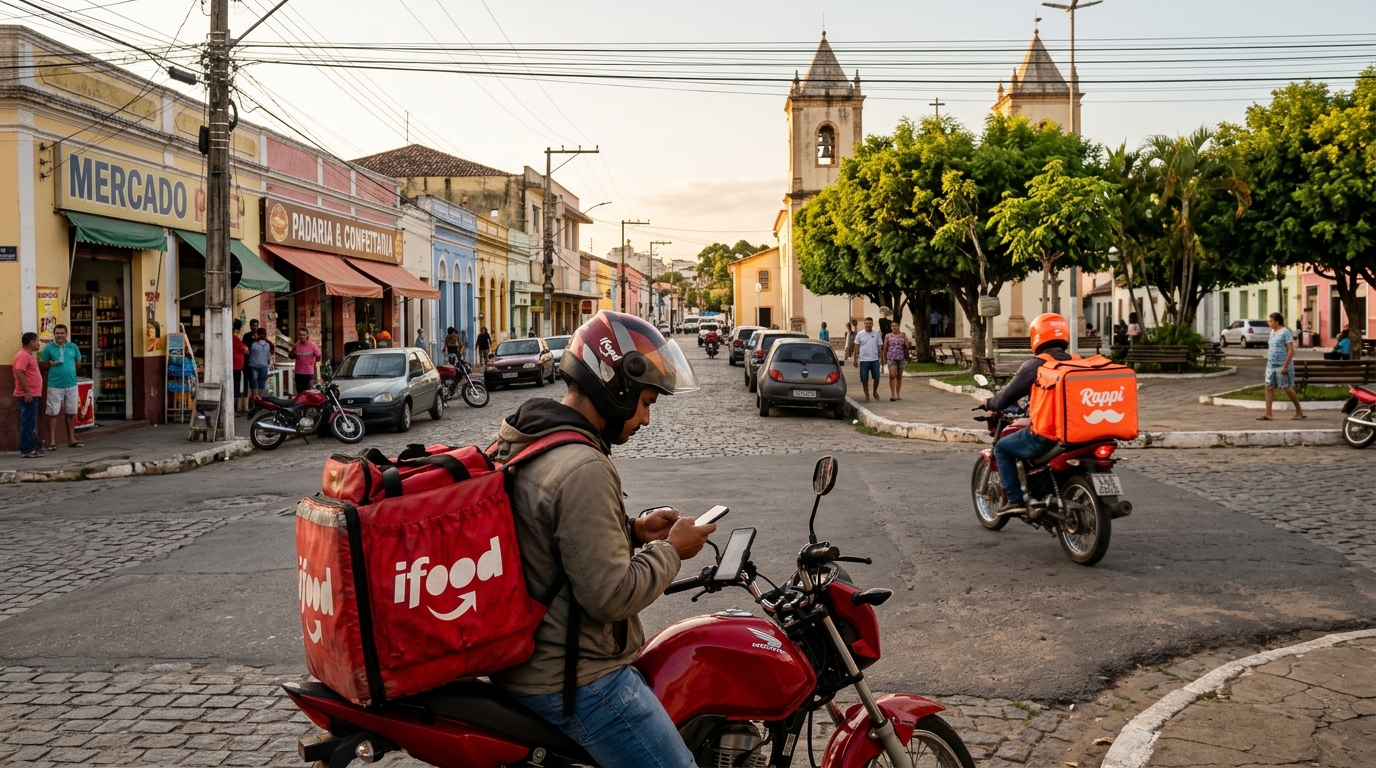
iFood, 99Food, and Keeta shift their battle to Brazil's regional markets. Learn how data intelligence helps platforms win outside major capitals.
Brazil's food delivery giants are shifting their focus from the dense streets of São Paulo to the country's mid-sized cities. As iFood, 99Food, and Keeta expand their footprints, the battle for market share is moving into regional hubs where consumer behavior requires a completely different strategic approach.
The competitive landscape for food delivery in Brazil is no longer confined to major state capitals. Companies are now deploying significant capital into the interior, targeting municipalities with populations of up to 250,000 residents. While iFood remains the leader with a presence in over 2,000 cities, challengers like 99Food and the newcomer Keeta are rapidly scaling. 99Food recently added 35 new cities to its roster, while Keeta is pushing into regional markets in Mato Grosso, Goiás, and Paraná.
Winning in these regional markets is not a simple task of copying a capital city strategy. Consumer habits in the interior differ wildly. For example, while app usage is standard in São Paulo, WhatsApp remains a dominant ordering channel in smaller cities, used by over 60 percent of consumers. Furthermore, regional diners often prioritize delivery speed and the specific reputation of a local restaurant over the massive discount coupons that drive volume in larger urban centers. This shift makes it critical for platforms to understand local restaurant landscapes with high precision.
Data intelligence transforms this expansion from a risky investment into a targeted strike. Without granular data, companies struggle to see the true level of competition in a mid-sized city. Manual tracking cannot keep up with thousands of municipalities. High-level numbers often hide the fact that a competitor might have a stronghold on the most popular local chains or that a specific city is underserved by fast-delivery options. Understanding the density of Quick Service Restaurants (QSRs) in these areas is the only way to ensure that regional expansion leads to profitability rather than just burned marketing cash.
Mapping the Regional Opportunity
As the market waits for the 2027 expiration of iFood's exclusivity agreements with CADE, the window for competitors to capture new restaurant partners is wide open. To build a sustainable regional presence, executives must go beyond basic population statistics. They need to analyze how effectively their brands are entering these specific markets compared to the incumbents. You can gain this level of insight by benchmarking your QSR Penetration by City to identify exactly where the competition is vulnerable and where your fleet can provide the most value.
To learn how custom data intelligence can support your expansion into new territories, contact our team today: Contact Doubledata.
Source: https://valorinternational.globo.com/business/news/2026/11/18/food-delivery-platforms-take-battle-beyond-brazils-major-cities.ghtml
