- Data analytics
Amazon’s Pivot to Whole Foods: Why Speed and Perishables Are the New Growth Engine
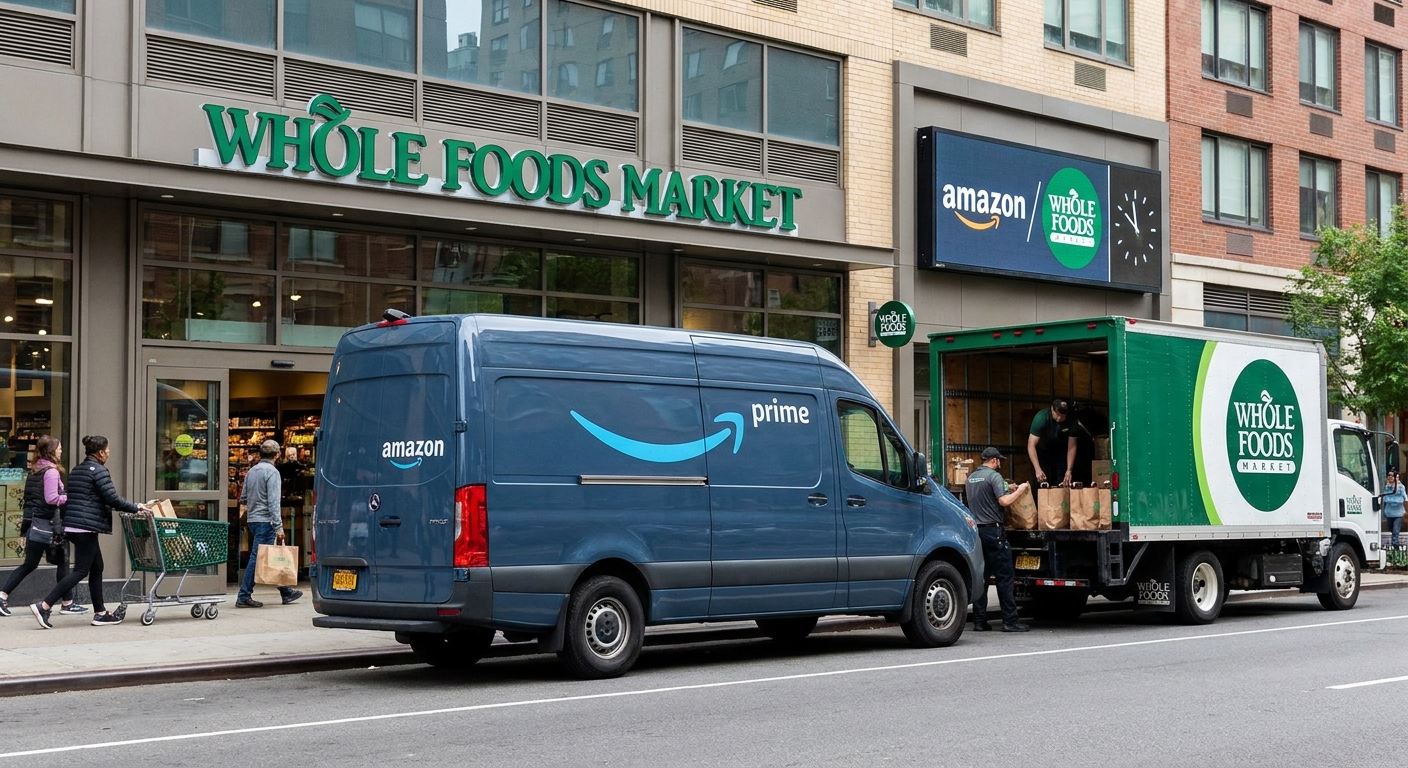
Amazon pivots to Whole Foods and faster delivery to capture grocery spend. Learn how data intelligence reveals the total addressable market.
Amazon is refocusing its grocery strategy by leaning into Whole Foods and faster fulfillment to capture the 80% of retail spending that still happens offline. By closing Amazon Fresh physical stores and launching urban Daily Shop formats, the tech giant aims to use fresh food as a gateway to broader household spending.
During the recent Q3 earnings call, Amazon executives made it clear that grocery is the missing piece of the household spending puzzle. CFO Brian Olsavsky explained that winning this segment starts with perishables. The logic is simple: if a customer trusts a platform with their milk and produce, they are significantly more likely to use that same platform for electronics, home goods, and apparel. This shift suggests that Amazon is no longer just experimenting with grocery, it is integrating it into the core of its retail ecosystem.
The numbers back this up. Amazon CEO Andy Jassy highlighted that shoppers who buy perishables via same day delivery purchase nearly seven times more everyday essential units than those who do not. Furthermore, grocery customers spend twice as much on non-grocery categories. By improving delivery speeds, Amazon is not only lowering its own fulfillment costs but also increasing the lifetime value of its Prime members. The company is betting that as the 80% of retail currently in physical stores eventually flips to e-commerce, its speed and fulfillment network will be the primary beneficiary.
For competitors in the food delivery and wholesale sectors, this move changes the definition of market share. Amazon is moving away from the large-format 40,000 square foot stores and toward smaller, 3,000 to 10,000 square foot urban locations. This allows them to penetrate high-density areas with more agility. Understanding the threat requires more than just looking at sales figures. It requires a granular look at how many households a competitor can actually serve within a specific delivery window. Without advanced data, a competitor might miss how quickly Amazon is closing the gap in specific high-value neighborhoods.
The Strategic Path Forward
As Amazon scales its urban footprint and speeds up its supply chain, traditional retailers and delivery platforms must quantify their own room for growth. The ability to see where the market is underserved is the only way to defend against a giant that uses grocery as a loss leader for other categories. To navigate this changing landscape, firms must conduct deep TAM Analysis to identify where Amazon’s expansion creates the most risk or opportunity. Relying on outdated market maps will not work when the competition is moving at the speed of same-day delivery.
To learn how our data can help you stay ahead of market shifts, please visit our contact page.
Source: https://www.foodnavigator.com/Article/2026/11/02/amazon-bets-on-faster-grocery-delivery-and-whole-foods/
