- Data analytics
Amazon’s Speed-First Grocery Strategy: Why Delivery ETA is the New Market Share Metric
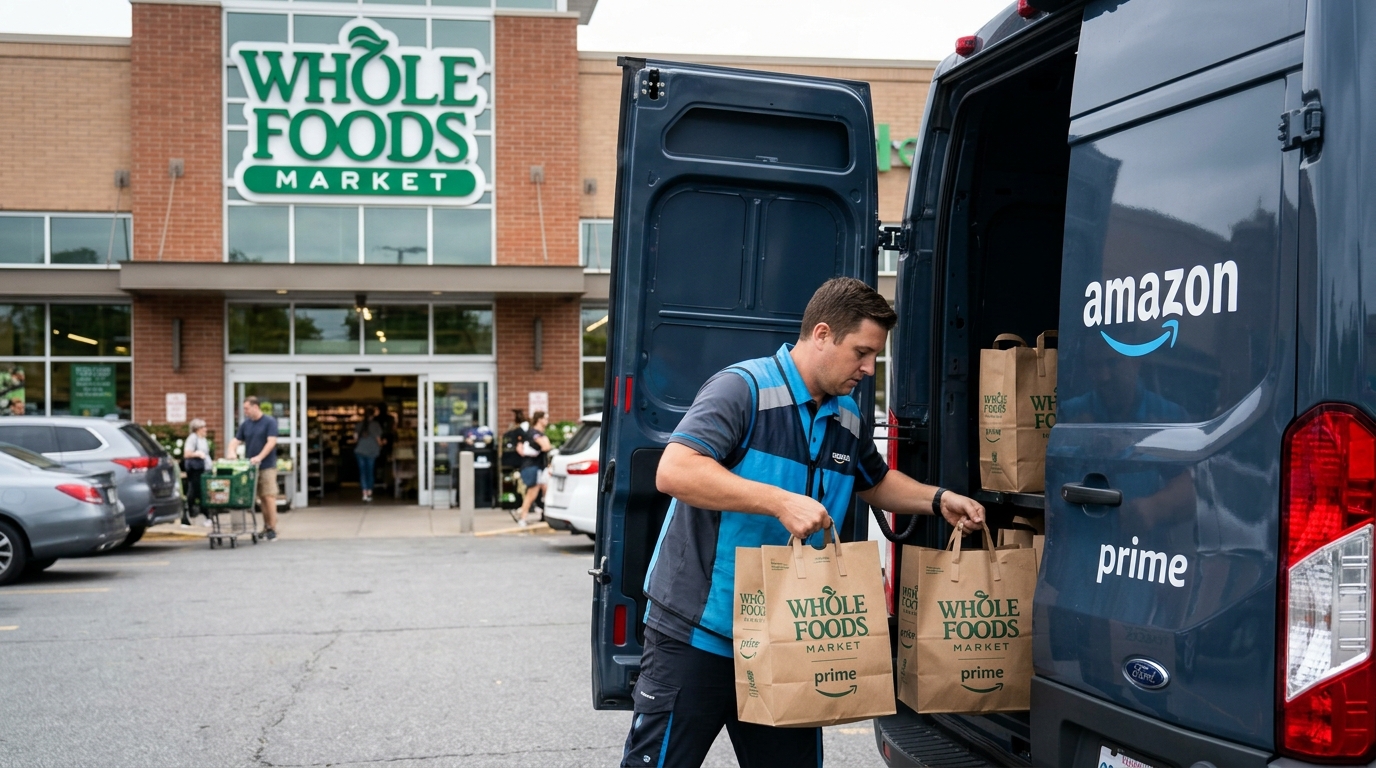
Amazon pivots to Whole Foods and faster delivery to capture grocery market share. Learn how benchmarking delivery speed is the key to competing.
Amazon is shifting its physical grocery strategy to focus on Whole Foods while aggressively cutting delivery times to lower operational costs. By linking perishables to high-frequency shopping habits, the tech giant is positioning speed as the primary driver for total household spend.
Amazon recently decided to close dozens of physical Amazon Fresh stores to double down on Whole Foods. This move reveals a clear shift in priority. While brick and mortar locations remain important for brand presence, the real battle is happening in the last mile. CEO Andy Jassy highlighted that faster fulfillment reduces the cost to serve each unit. This efficiency allows Amazon to match or beat competitor prices while still turning a profit on fresh produce.
The data behind this shift is telling. Customers who shop for perishables with same-day delivery buy nearly seven times more everyday essentials than those who do not. Perishables are the hook that pulls shoppers into the broader Amazon ecosystem, leading to more purchases in high-margin categories like apparel and home goods. Amazon is effectively using milk and produce as a gateway to becoming the primary retailer for every household need.
For competitors in the food delivery and grocery space, the challenge is no longer just about having the right inventory. It is about the logistical intelligence behind the delivery window. Amazon tracks exactly how many items reach customers same-day or overnight, which was 1.5 billion items in the last quarter alone. Without granular data on competitor speeds and service areas, other platforms are flying blind. They cannot see if their local delivery promise matches the reality of the neighborhood or if they are losing customers to a faster alternative.
Regaining Control Through Logistical Intelligence
To compete with Amazon’s logistics machine, platforms and major chains must look beyond simple price comparisons. They need to understand how their fulfillment speed stacks up in specific urban zones compared to the market leaders. As Amazon scales its smaller Daily Shop urban formats, the pressure on delivery windows will only increase. Leaders should use specialized tools to Benchmark Delivery ETA across their entire network. This allows them to identify exactly where they are losing the speed race and where they can realistically win back market share.
Understanding these speed metrics is the first step toward optimizing the supply chain and maintaining customer loyalty in an era where the fastest delivery often wins the biggest basket. If you are looking to refine your market strategy with precise delivery data, get in touch with our team today.
Contact us here: https://doubledata.com/about-us/contact#form
