- Data analytics
Amazon’s $8 Prepared Meal Expansion: The New Battleground for QSR Market Share
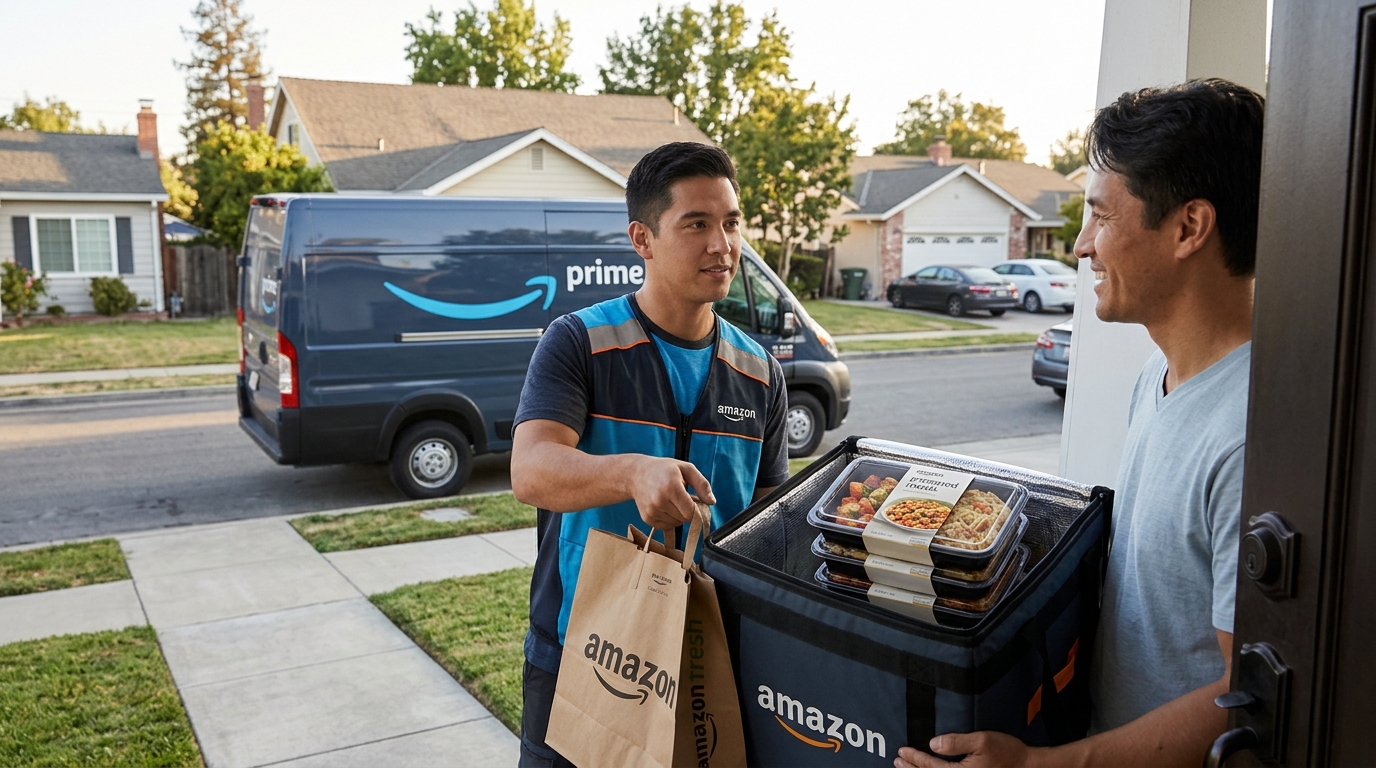
Amazon's new $8 prepared meal delivery creates fresh competition for QSRs and delivery apps. Learn how to track this market shift using data.
Amazon has launched same-day delivery of prepared meals across 2,300 U.S. cities, offering ready-to-eat options for under $8. This aggressive move positions the retail giant as a direct competitor to both traditional grocery delivery and the Quick Service Restaurant (QSR) industry.
Amazon is no longer just delivering ingredients. By offering heat-and-eat meals like Chicken Bacon Ranch Pasta and General Tso’s Chicken, they are moving directly into the territory of local diners and fast-food chains. The integration with Amazon Now and Prime’s free delivery for orders over $25 makes this a highly convenient and cost-effective alternative for the average consumer. This is a clear attempt to capture the "I am hungry now" segment of the market, which has historically been the primary driver for food delivery platforms.
For executives at food delivery platforms and restaurant groups, this expansion represents a significant shift in consumer behavior. Amazon’s ability to bundle prepared meals with household essentials creates a "one-stop-shop" advantage that is difficult for single-purpose apps to match. The low price point is particularly disruptive, as it targets the budget-conscious professional who might otherwise order takeout through a traditional delivery app. This pricing strategy forces a difficult question for existing players: how do you maintain margins when a global logistics leader is subsidizing the delivery cost of an $8 meal?
Understanding the true impact of this rollout requires more than just reading the headlines. While Amazon mentions 2,300 cities, the density of their service and the specific menu availability can vary significantly by zip code. Without granular data, competitors are flying blind, unable to see how Amazon's presence affects local order volumes or customer retention. Relying on manual checks or high-level market reports is no longer sufficient when a giant like Amazon moves this quickly and at this scale.
Defending Your Market Share with Data
To stay competitive, platforms and restaurant chains must move beyond general geographic targets and focus on hyper-local insights. The key to surviving this expansion lies in identifying exactly where your high-value customers overlap with Amazon’s new service areas. By using advanced intelligence to Track Market Saturation, you can pinpoint the neighborhoods where Amazon's under $8 meals pose the greatest risk. This allows for more surgical marketing campaigns, localized pricing adjustments, and better-informed site selection for future growth.
The food delivery landscape is evolving rapidly. Success will go to the leaders who use data to see around corners and adapt their value propositions before the competition takes hold.
Ready to see how these market shifts affect your bottom line? Contact our data experts today to build your competitive strategy.
Source: Small Business Trends
