- Data analytics
Alibaba’s Pivot: How Taobao Flash Delivery Reached the Efficiency Frontier
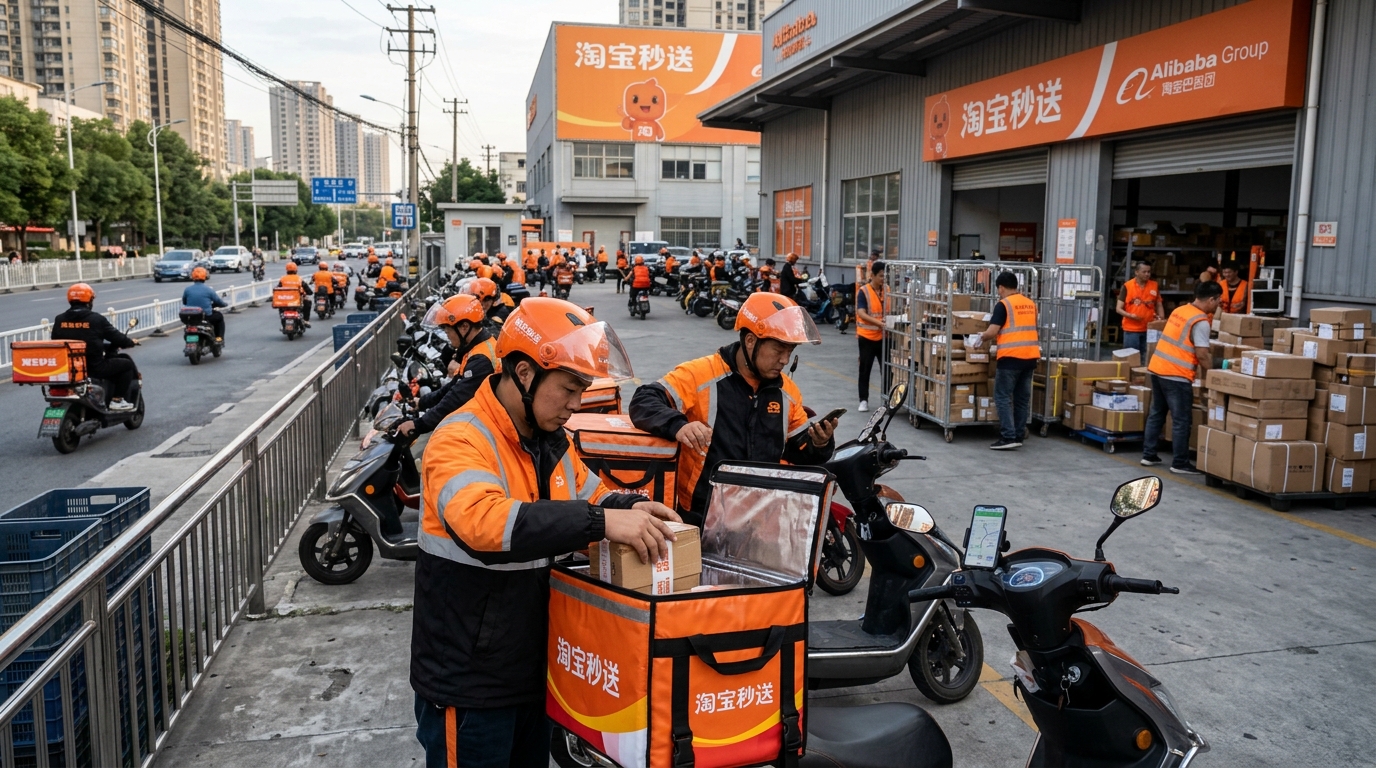
Alibaba’s Taobao Flash Delivery narrows losses and stabilizes market share. Explore the data behind this shift to high-value retail and efficiency.
Alibaba’s China instant retail business reported a 22% revenue growth and a significant narrowing of losses this quarter. By shifting focus from sheer volume to unit economics, the company has stabilized its market share and contributed to a massive surge in group-level profits.
Alibaba’s Taobao Flash Delivery is proving that the era of mindless expansion in the food delivery and instant retail sector is over. After a period of aggressive spending to acquire users, the platform has entered what management calls an efficiency-optimization phase. The results are clear. Revenue reached 58.7 billion yuan while losses narrowed, helping the broader e-commerce group post a 243% jump in profit. This change marks a turning point for the industry in China, where the focus has moved from who can spend the most to who can operate the most intelligently.
The strategy involves a heavy reliance on high-value categories. In the early days of the delivery wars, low-priced items like coffee and tea were used to build a user base. While these items grew volume quickly, they rarely covered the cost of the rider and marketing. Taobao Flash Delivery has successfully shifted its mix. Today, non-tea-drink orders make up more than 75% of the total. By expanding into pharmaceuticals, fresh produce, and household goods, the platform has increased the average order value, making every delivery more profitable.
Data from major financial institutions shows that Taobao now holds a stable market share of roughly 42% to 46% in the instant retail space. This stability is crucial because it allows the company to focus on fulfillment scheduling and AI merchant tools rather than just defensive marketing. Instead of using subsidies to buy customers, they are using data to help merchants cut costs and optimize their operations. This shift suggests that the competitive landscape is no longer just about delivery speed but about the depth of the retail supply chain.
The Strategic Path Toward Margin Control
For executives looking to replicate this success, the lesson is clear: volume without quality is a trap. The path to profitability in a mature market requires a granular understanding of where your orders are coming from and what your competitors are doing in real-time. To maintain a competitive edge and verify your standing in the local life sector, companies must rely on precise Market Share Benchmarking to track their real-time performance against rivals. This intelligence allows leaders to move beyond high-level estimates and make decisions based on actual market movements.
As Alibaba aims for overall profitability by fiscal 2029, its focus on non-food categories will be the main growth driver. This requires a sophisticated approach to inventory management and warehouse layout that goes far beyond traditional food delivery. Success in this next phase will belong to those who can master the data behind their delivery zones and category performance.
If you need deeper insights into your market position or want to optimize your delivery network with high-quality data, contact our team today at Doubledata Contact.
Source: https://finance.biggo.com/news/fbb96dad-f91d-444d-8845-123f6e503354
