- Data analytics
ChatGPT tests show AI chatbots steer diners to costlier delivery apps
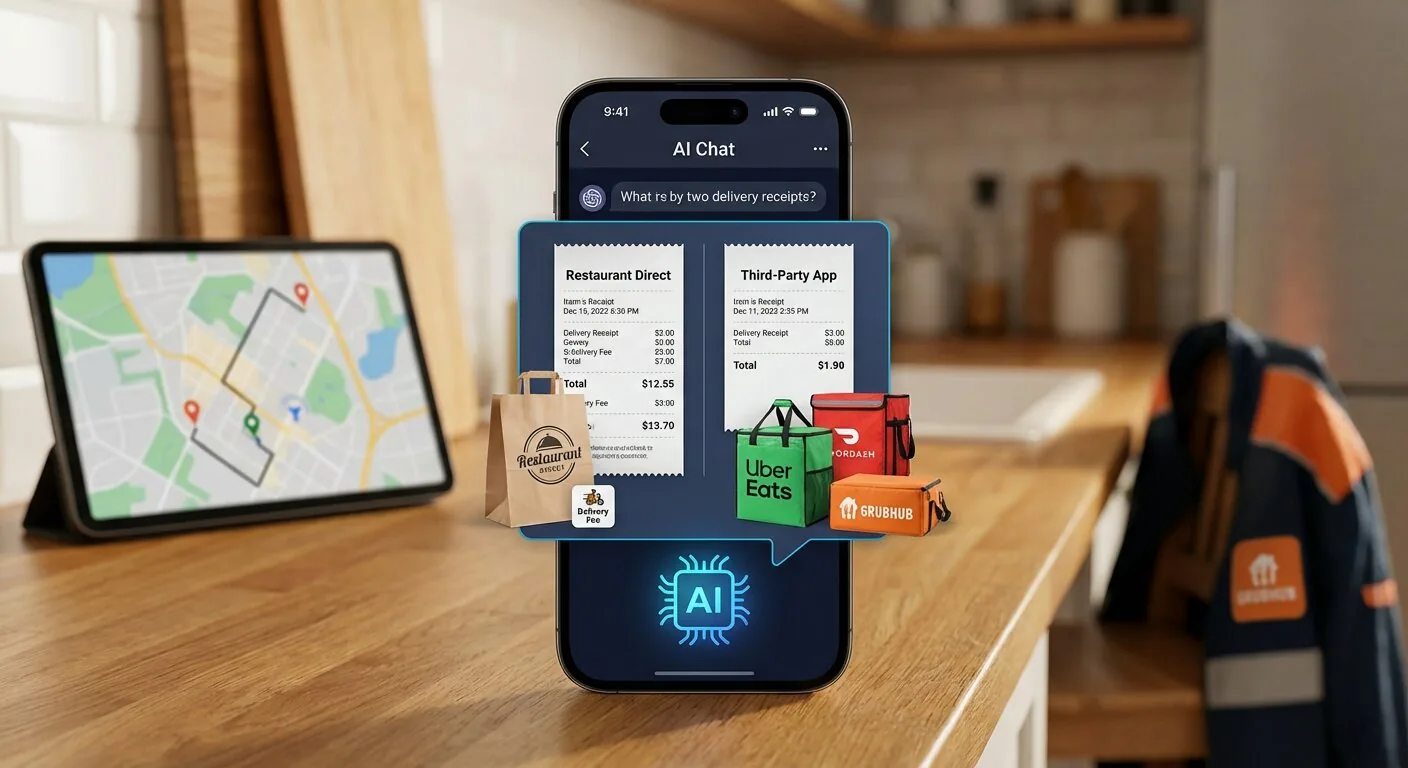
AI chatbots still recommend expensive delivery apps over direct ordering. How price parity data helps restaurants win back their margins.
AI chatbots are quickly becoming the new search engines for hungry customers, yet they are not yet the cost-saving tools restaurants hoped for. Current tests show that bots like ChatGPT often default to expensive third-party apps and miss the more affordable direct ordering options available on restaurant websites.
Gemini showed the same pattern as ChatGPT in the experiments, according to Restaurant Business Online.
When a user asks a chatbot for a burger recommendation, the bot looks at proximity, ratings, and convenience. The bots are smart, and for now they are biased toward the largest players. They often suggest ordering through DoorDash or Uber Eats simply because these platforms have the most recognizable digital footprints and handle fulfillment for restaurants that lack their own drivers.
The chatbots also weigh the likelihood that a user already has an account with a major delivery app. They may not recognize a lower-cost direct ordering link unless that data is presented in a highly structured format.
The bias costs money, since third-party apps frequently include markups and service fees that make the meal more costly for the consumer and less profitable for the restaurant. Even when a chatbot is told to look for the best price, it often fails to see the direct-to-consumer link where the price is lower. The AI reflects the current market dominance of aggregators instead of seeking out the best economic deal for the user.
Technology providers like Olo and Toast are developing ways to make restaurant menus more readable for AI agents. A standardized architecture for menus would make it easier for chatbots to find and recommend direct ordering. An AI that can verify a lower price on a restaurant's own site is much more likely to point the customer there, and that takes a massive amount of clean, structured data that AI can trust.
One such architecture is a universal menu, which Olo and Toast are racing to build so their restaurants can be found by AI agents.
Digital pricing strategy now reaches beyond the physical menu to how the algorithms that guide consumer choices perceive a brand's prices. Restaurants without a granular understanding of how they are priced across various delivery platforms remain at the mercy of the aggregator's markup logic.
Direct prices versus app prices decide what AI recommends
Restaurants and delivery platforms need to know exactly how their direct prices compare to the versions listed on third-party apps. A large discrepancy they are not aware of can mean an AI bot never recommends the direct channel. Brands that analyze price parity across all digital storefronts can make their most profitable channels the most attractive to AI agents and protect their brand value.
If you want to know how your direct prices compare with your delivery app listings, talk to our team: Get in touch with DoubleData.
Source: Restaurant Business Online, restaurantbusinessonline.com
