- Data analytics
Little Caesars and Flytrex launch drones that carry full family meals
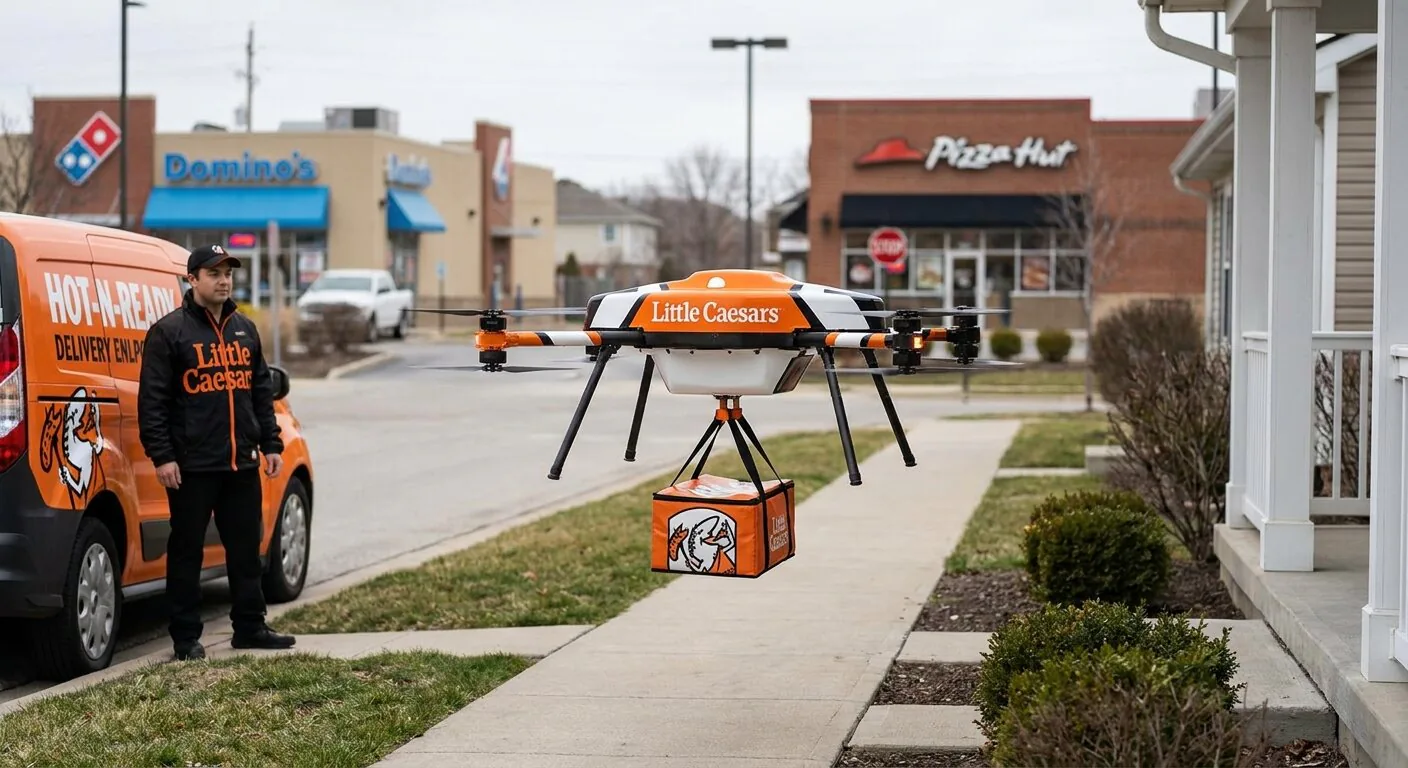
Little Caesars deploys high-capacity Flytrex drones for family meals. Discover how this shifts delivery benchmarks and the role of data intelligence.
Little Caesars has partnered with Flytrex to launch a high-capacity drone delivery service capable of transporting full family meals in under five minutes. With payload capacity raised to 8.8 pounds, the brand is taking drone technology out of the testing phase and into high-volume quick-service operations.
Weight has always been the primary hurdle for drone delivery. Most existing systems could only handle a small snack or a single coffee, which made them impractical for the average family pizza night. The Sky2 drone, an octocopter configuration, can carry two large pizzas and drinks, so Little Caesars is targeting the core of its business, family-sized orders, instead of single-item convenience.
The deployment runs in Wylie, Texas. Road-based delivery remains the standard, and the 4.5-minute average delivery time achieved by Flytrex is a massive reduction in customer wait time. Platform directors and chain executives can expect customers to raise their expectations for speed and food quality on arrival.
The drones have a four-mile range, and the system is integrated directly into the restaurant's ordering platform, which keeps the process simple for store staff, according to Nation's Restaurant News.
Press releases alone cannot show the impact of this technology. Tracking delivery speeds across different neighborhoods and comparing them to traditional couriers shows exactly where drones provide the best return on investment. Without this granular data, it is impossible to know if the 4.5-minute promise is a consistent reality or a best-case scenario.
The 4.5-minute benchmark for quick-service delivery
Chipotle and Wendy's are also experimenting with autonomous delivery, and competition is moving toward transit times. Brands need to know whether their current delivery infrastructure can compete with a five-minute turnaround, and ETA Benchmarking tracks how their delivery speeds compare to these new high-capacity autonomous fleets.
Chains measuring their delivery times against the 4.5-minute drone benchmark can contact DoubleData for ETA comparisons by neighborhood.
Source: https://www.nrn.com/quick-service/little-caesars-deploys-high-capacity-drone-delivery, nrn.com
