- Data analytics
India's food delivery market forecast to reach $269BN by 2034
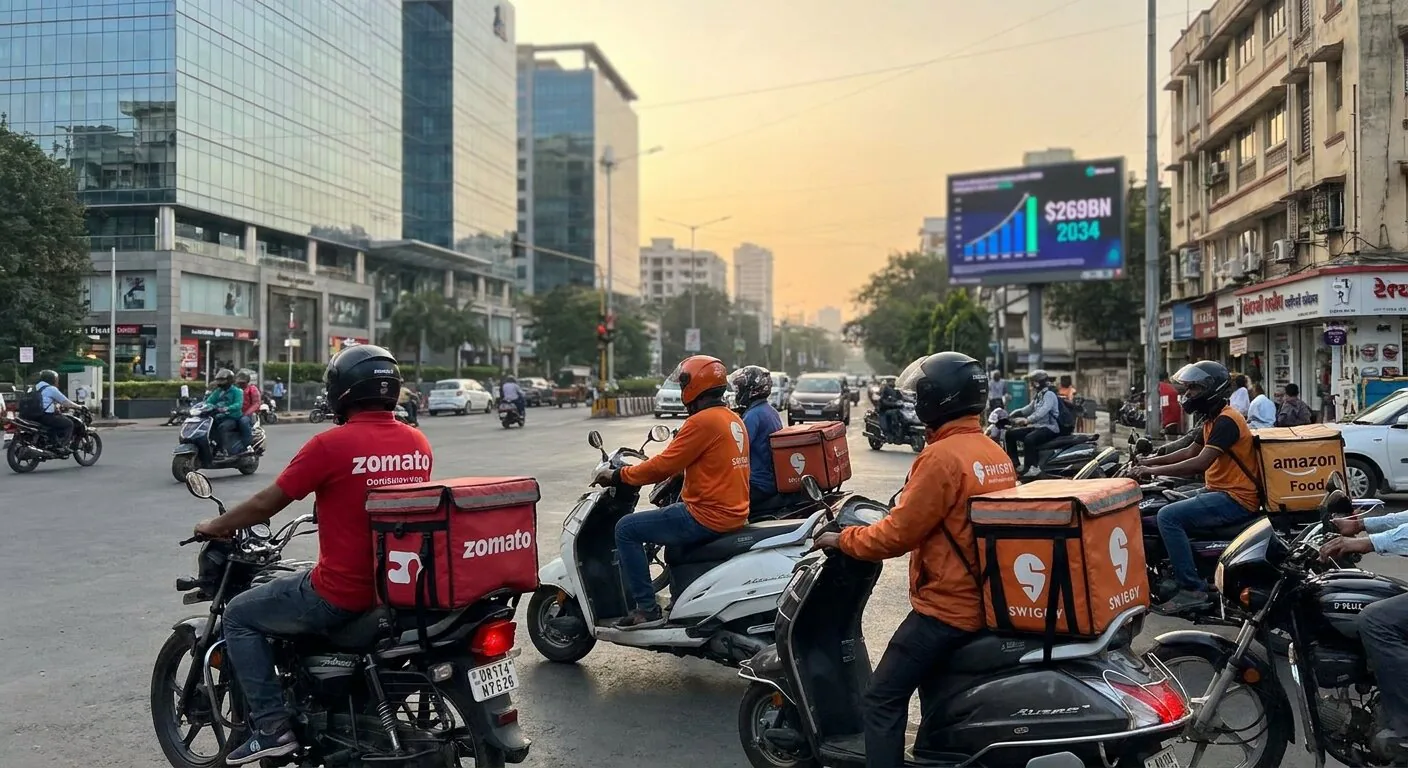
India's food delivery market is set to reach $269 billion by 2034. Discover how data intelligence helps platforms manage Tier-2 expansion and thin margins.
India's online food delivery market is projected to reach $269.77 billion by 2034, driven by rapid expansion into Tier-2 cities and a surge in digital payments. Major players now have to capture new territory while managing the high operational costs that come with rapid scaling.
According to Yahoo Finance, the forecast starts from a market size of $46 billion in 2025.
Platforms like Swiggy and Zomato are racing from Tier-1 metros into smaller urban centers in states like Maharashtra, Tamil Nadu, and Karnataka, with a projected annual growth rate of over 21%. Digital literacy is rising fast in these areas, yet the new markets operate differently than established hubs, so metro strategies cannot simply be copied: consumer preferences change, and the density of restaurant partners varies significantly across regions.
Success in this $269 billion market takes local knowledge as well as a large marketing budget. Many companies struggle because they rely on outdated or surface-level reports. Tracking venue status and kitchen availability gives a truer picture, and without it, expansion into a Tier-2 city can lead to high delivery failure rates or poor arrival estimates that damage a brand's reputation before it even takes hold in a new region.
Swiggy is testing 15-minute delivery with its Snacc app and Zomato is countering with quick-service innovations, so the margin for error shrinks. Operational costs remain high because of fuel prices and the need for a constant fleet presence. Platforms have to identify exactly where demand is high enough to justify the logistics spend, and the actual number of active kitchens versus those listed is the difference between a profitable expansion and a costly mistake.
Active kitchens versus listed kitchens in tier-2 cities
Expansion over this decade of growth depends on the true volume of available restaurants and the service gaps in each city. A thorough TAM Analysis gives a precise view of regional opportunities and supports more accurate growth targets, so investment goes to the cities with the highest density of high-value partners and consumers.
Before expanding into Tier-2 cities, find out how many of the listed kitchens are actually active. Connect with us here.
Source: https://finance.yahoo.com/markets/stocks/articles/india-online-food-delivery-forecast-085400876.html, finance.yahoo.com
