- Data analytics
DoorDash readies its own point-of-sale system, challenging Toast
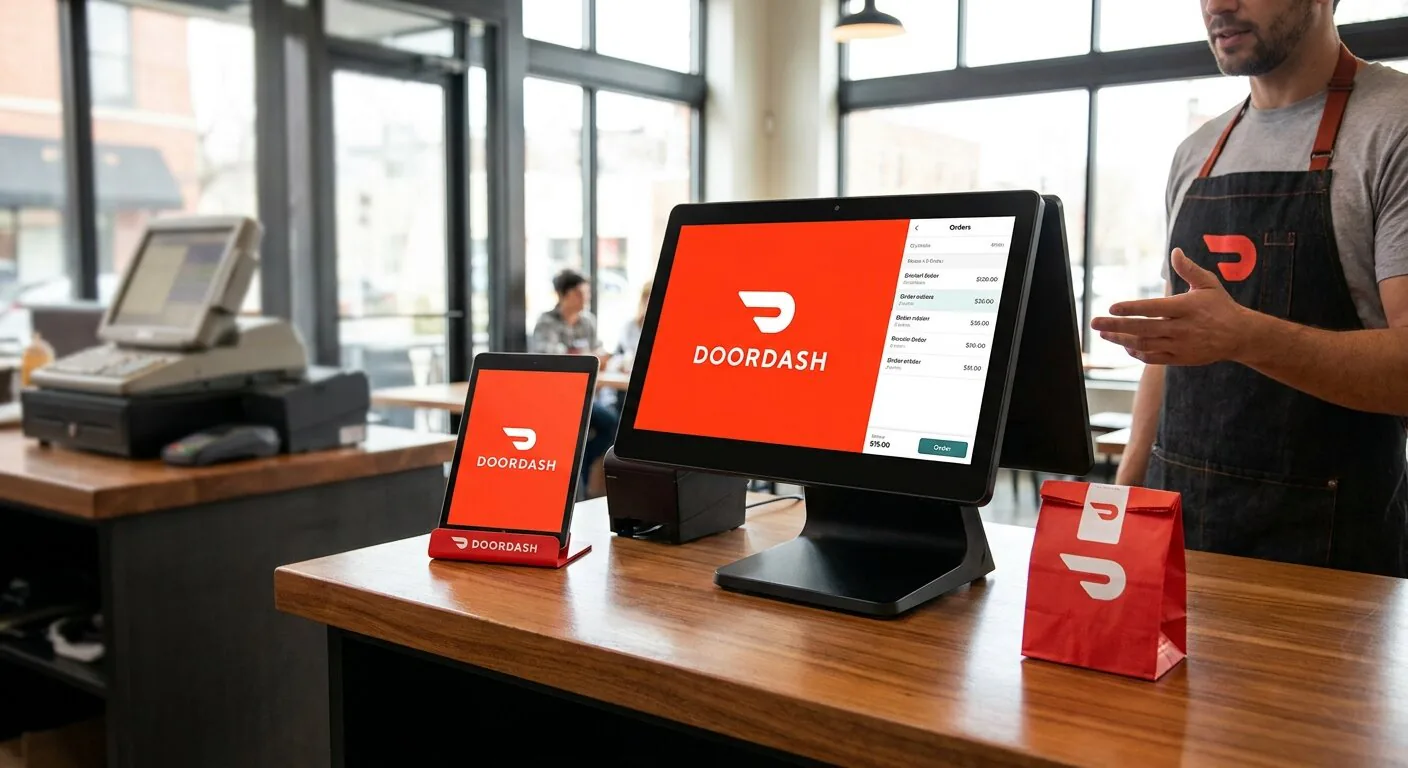
DoorDash's move into POS technology threatens payment firms like Toast. Learn how data intelligence tracks this market shift and merchant adoption.
DoorDash is preparing to launch its own point-of-sale technology, moving beyond delivery into the heart of restaurant operations. The plan directly challenges payment firms like Toast, and analysts are downgrading major payment processors, citing DoorDash's potential to capture up to 20% of the U.S. restaurant market by 2035.
For years, DoorDash focused on the logistics of getting food from point A to point B. Recent moves, including the $1.2 billion acquisition of reservation platform SevenRooms and the launch of smart kitchen hardware, show a clear intent to own the entire restaurant operating system. In the point-of-sale (POS) space, DoorDash moves from delivery partner to primary software provider for the physical storefront.
Merchant data ownership is what changes. When a restaurant uses a third-party payment processor, the delivery platform only sees the orders that go through its app. As the POS provider, DoorDash gains visibility into every transaction, whether it is for dine-in, carry-out, or delivery. That deep integration makes the platform "sticky," so a restaurant finds it much harder to switch to a competitor, and traditional payment firms face a significant threat to their win rates and long-term merchant retention.
Stock reports alone cannot show the speed of this disruption. Analysts use hiring activity and merchant feedback to estimate DoorDash's progress, while data intelligence gives a more precise view of where the new technologies are deployed at a local level. Manual tracking falls short when a platform can scale across thousands of locations in a single quarter.
Merchant migration shows which regions are at risk
Delivery apps and restaurant hardware keep converging, and the adoption of new hardware and software across regions is the signal that identifies high-risk areas before the competition takes hold, and market share benchmarking shows which merchants are migrating to all-in-one platforms and which regions remain open for growth.
To learn how our data can help you track these shifts, please reach out to our team at DoubleData.
Source: The Mercury News
