- Data analytics
DoorDash exits four markets as Deliveroo leaves Qatar and Singapore
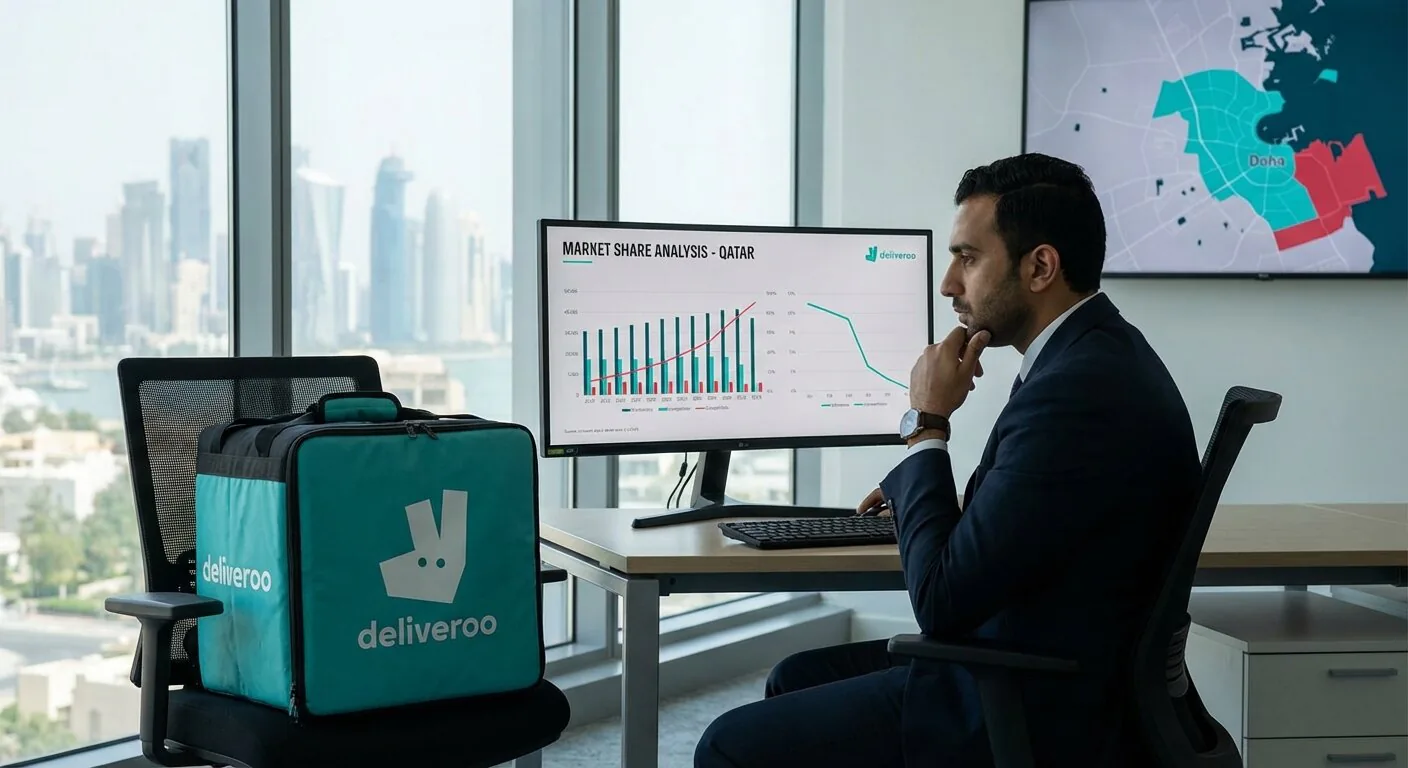
DoorDash shuts Deliveroo in Qatar and Singapore and Wolt in Japan and Uzbekistan. Learn how market share benchmarking shows where to compete.
DoorDash, which owns Deliveroo and Wolt, is withdrawing from four markets to prioritize profitability over thin expansion: Deliveroo is leaving Qatar and Singapore, and Wolt is leaving Japan and Uzbekistan. In Qatar, Deliveroo could not displace regional players such as Talabat, a subsidiary of Germany-based Delivery Hero.
The decision follows a detailed review of country-specific conditions. Despite high smartphone usage and a strong culture of app-based ordering in Qatar, Deliveroo struggled to displace rivals that already possessed established logistics networks and deep brand loyalty. The exit reflects a broader trend in the food delivery industry, where platforms are moving away from rapid global growth and toward building sustainable scale in core regions.
Deliveroo, now owned by DoorDash, entered Qatar late, and the barriers to entry proved too high to overcome without burning through excessive capital. High-profile events and tourism boosted the sector, yet competitive pressure from established rivals still made long-term growth difficult.
A wealthy market does not guarantee success. Platforms need to understand the competitive density before the first order is even placed: in many of the exited markets, late entrants found the most popular restaurants already tied to exclusive agreements with local giants. Without granular data, a platform might see a growing market and miss the fact that the most profitable delivery zones are already locked down.
Restaurant availability, delivery fees, and competitor uptime reveal these hidden barriers better than simple demographic stats, and they show which markets are open for competition. If a rival controls 80 percent of the QSR (Quick Service Restaurant) volume in a specific city, for example, a marketing budget alone will not keep a new entrant alive. The entrant needs a data-driven map of where the gaps in service actually exist.
Local share data shows whether to double down or pull out
Global delivery giants are recalibrating their footprints around operational efficiency, and market share benchmarking shows a platform's standing against local giants. Knowing where a competitor is winning lets a platform double down on its strengths or pull out before capital is wasted.
If you are deciding whether to double down on a market or pull out, speak with our analysts at DoubleData.
Source: Gulf News, gulfnews.com
