- Data analytics
China drafts rules banning below-cost food delivery subsidies
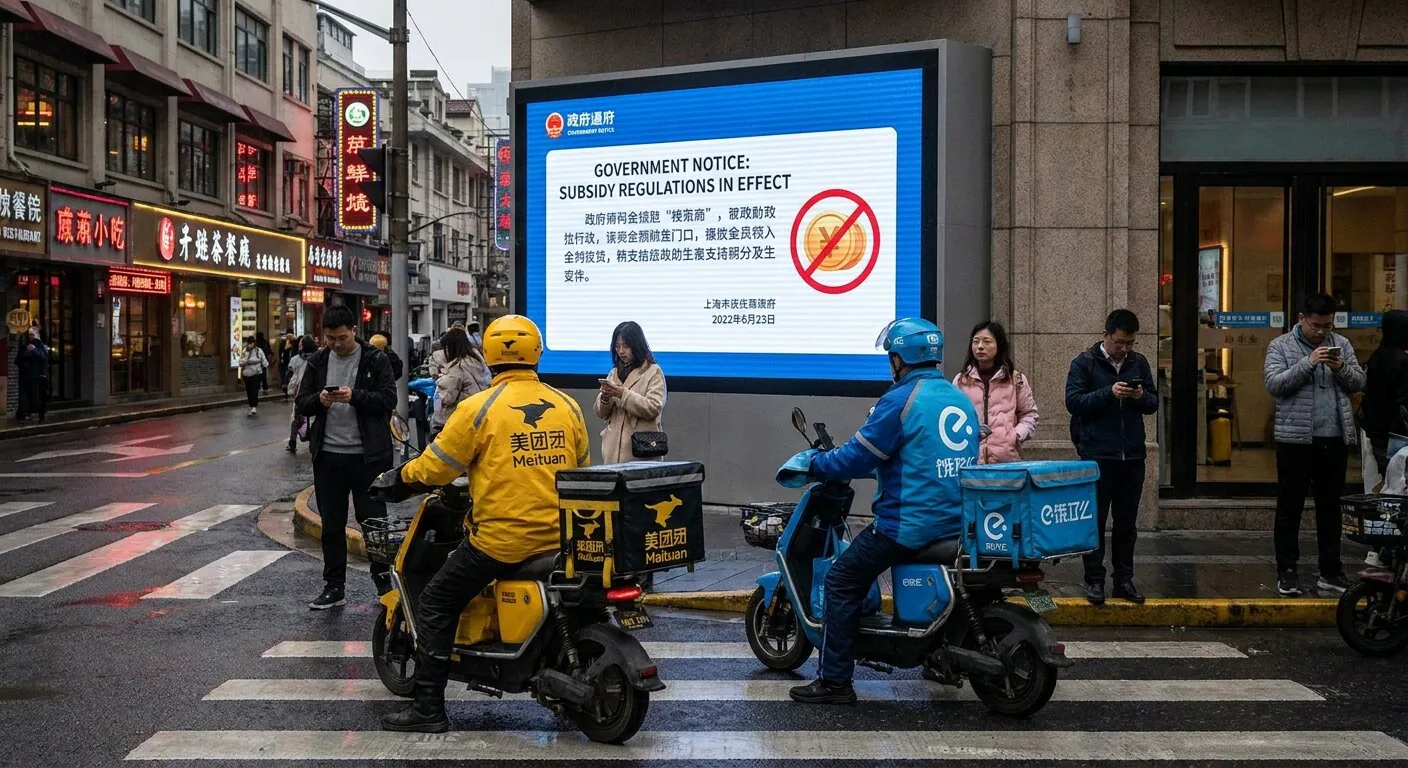
China moves to ban predatory subsidies and price wars in food delivery. Learn how data transparency will redefine competition for delivery giants.
Chinese regulators are cracking down on the predatory pricing and aggressive subsidies that have defined the food delivery market for years. New draft rules aim to stop platforms from using capital advantages to seize market share or coercing merchants into participating in loss-making promotions.
The State Administration for Market Regulation (SAMR) recently issued a statement targeting what it called irrational competition in the industry. According to the regulator, these practices hurt small businesses, delivery drivers, and even consumers in the long run. Under the proposed framework, platforms will be banned from selling goods below cost and from using large-scale subsidies to disrupt market order.
Platforms in the world's largest food delivery market will need to prove that their pricing strategies are sustainable and fair instead of relying on brute financial force. One of the key new rules requires platforms to disclose subsidy data both before and after a campaign, which makes it harder for giants to hide predatory pricing behind complex discount structures.
Every discount now needs a record
Thousands of shifting promotions across different cities and merchant types are nearly impossible to monitor without data intelligence, and manual reports fall short when the regulator demands detailed disclosures and proof of fair market conduct. Knowing exactly where and how subsidies are being deployed is now a matter of compliance as much as a matter of strategy.
Growth at any cost is ending, and platforms need systems that track every discount to stay within legal boundaries while remaining competitive. A promotion database of historical and current subsidy trends gives a clear view of market activity and competitor behavior, and helps justify pricing decisions to regulators.
If you need a record of market subsidy trends to justify your pricing to regulators, reach out to DoubleData via our contact page.
