- Data analytics
Amazon Business expands fresh grocery to 2,300+ cities
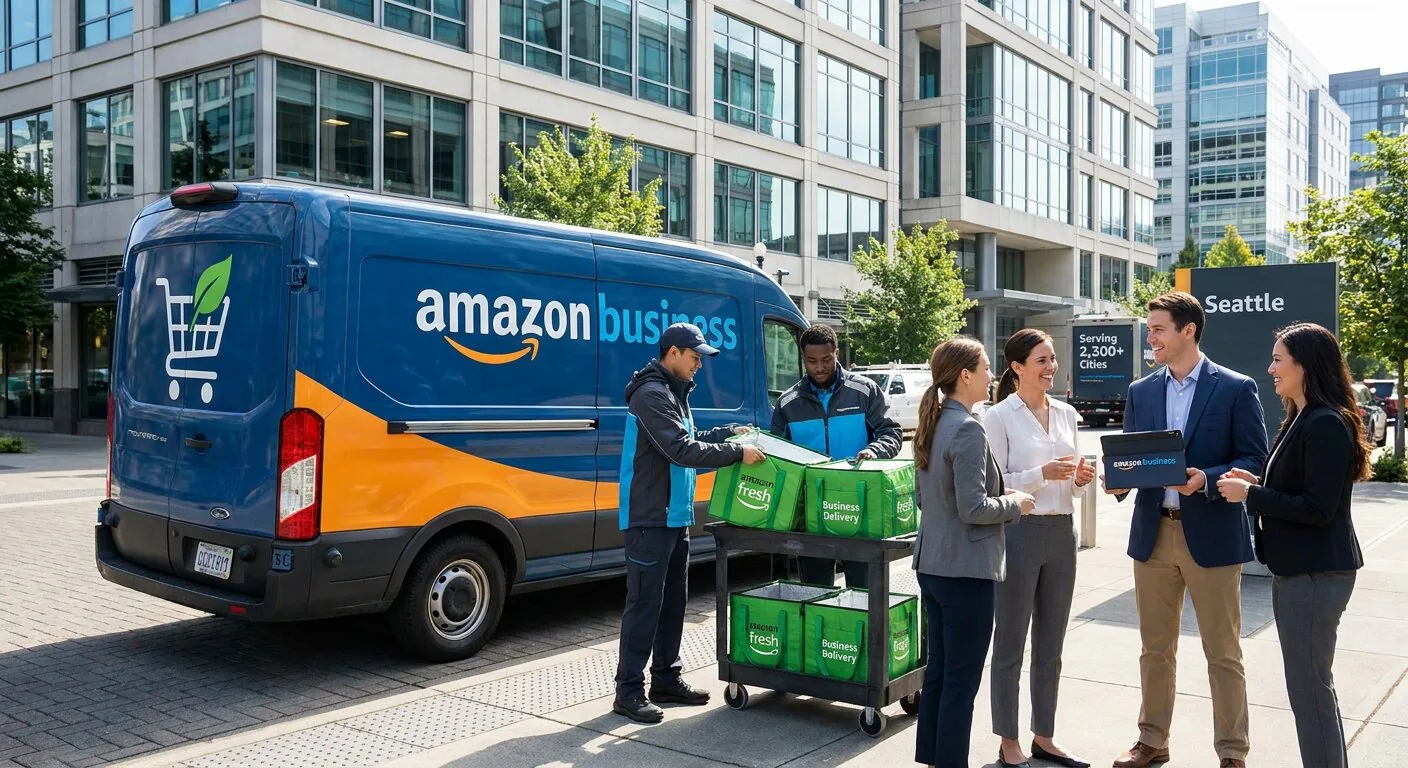
Amazon Business now offers same-day fresh grocery delivery in 2,300+ cities. Learn how this affects the B2B wholesale and catering market.
Amazon Business is now delivering fresh groceries to organizations in more than 2,300 U.S. cities, offering same-day delivery for perishables alongside traditional office supplies. Its "one-stop-shop" experience directly threatens the market share of traditional food service distributors and local wholesalers.
Office managers and small business owners can now put dairy, produce, and meat in the same cart as printer ink and cleaning supplies. Amazon has bridged its consumer grocery success and its massive B2B platform, and a single delivery window combined with the power of Business Prime makes this a formidable challenge to established catering and wholesale suppliers.
Freshness is handled by Amazon's temperature-controlled fulfillment network, a rigorous six-point quality check, and a "Freshness Guarantee". That lets Amazon compete on quality as well as price, and it changes how businesses source their daily essentials. The expansion into 2,300 cities through 2026 suggests that Amazon is targeting every major commercial hub in the United States.
Pricing transparency is where competitors struggle most. Amazon often leads the market with aggressive, dynamic pricing that adjusts based on regional demand and supply chain efficiency. A traditional wholesaler without high-frequency data may lose long-term clients to the lower-cost, high-speed model and never see exactly where the price gap started. Any firm that wants to protect its margins needs to know how these price points fluctuate from one zip code to the next.
How wholesalers can respond to Amazon's logistics power
Static price lists and manual market checks fall behind a tech giant that adjusts its rates constantly. Companies need visibility into the exact cost of goods that digital-first competitors offer their clients, and data intelligence shows whether Amazon's expansion is gaining traction through price leadership or purely through delivery speed.
Category managers who Monitor Grocery Pricing can track regional trends and adjust their own B2B strategies so they are not undercut on high-volume staples like coffee creamer or breakroom fruit. The same data informs decisions about delivery fees, minimum order values, and bulk discounts that keep a client base loyal.
Wholesalers who want to track Amazon Business grocery prices by region can talk to DoubleData.
Source: https://www.aboutamazon.com/news/retail/amazon-business-fresh-grocery-same-day-delivery
