- Data analytics
Amazon Business puts fresh groceries in the B2B office supply cart
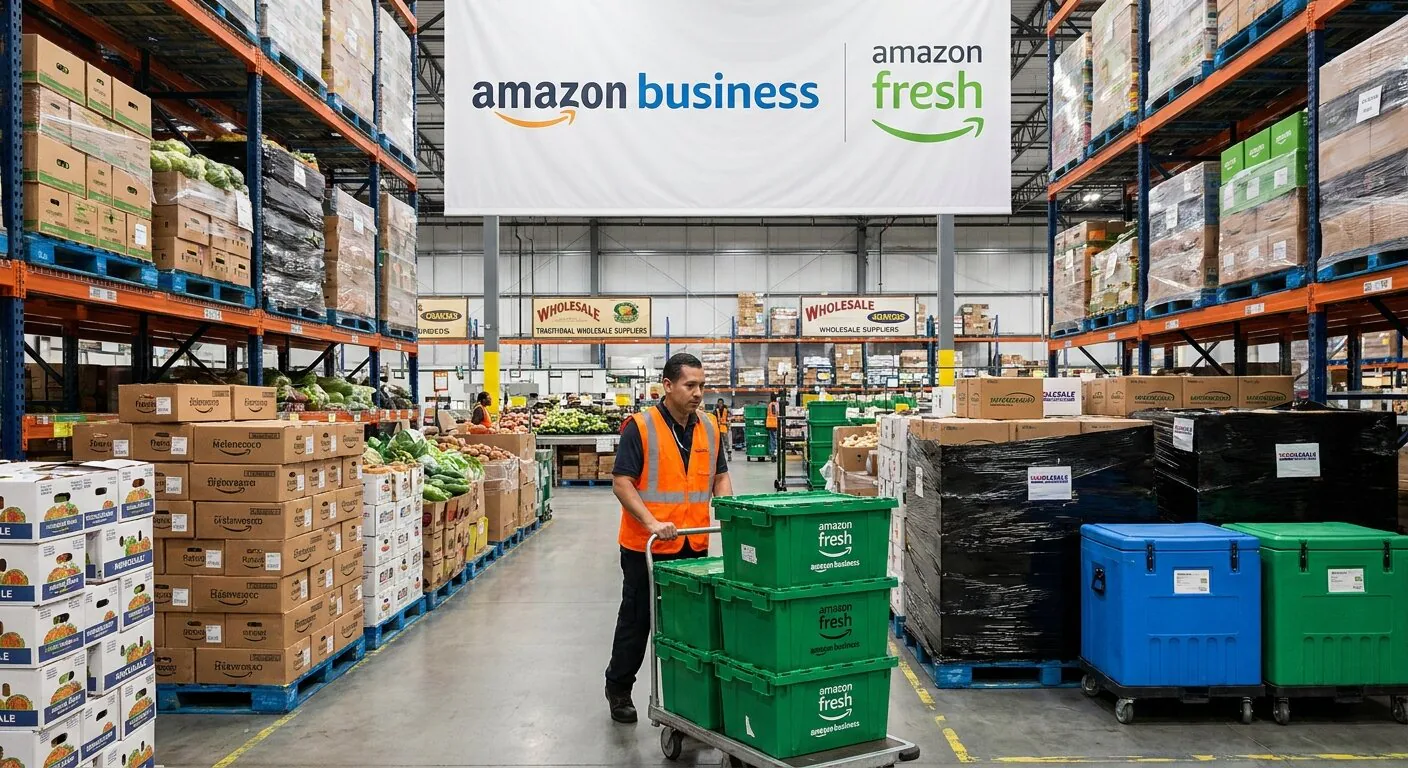
Amazon expands fresh grocery to 2,300+ cities. Discover how data intelligence helps wholesalers compete with Amazon's B2B grocery push.
Amazon Business has expanded its fresh grocery delivery service to more than 2,300 cities across the United States. Business customers can now order perishable goods like dairy, produce, and meat alongside their standard office supplies in a single checkout experience.
For years, Amazon Business focused on non-perishables and office essentials. Adding fresh food solves a common logistical headache for office managers and facility directors, who no longer need separate vendors for breakroom snacks, meeting catering, and cleaning supplies. One delivery window now covers the entire shopping list. With over eight million customers, including the vast majority of the Fortune 100, Amazon is positioned to disrupt the traditional wholesale and catering supply chain.
Established wholesalers and foodservice providers get a new competitor and a shift in what customers expect. Amazon is bringing the convenience of B2C delivery (Same-Day Delivery and free shipping for Prime members) into the professional environment. Traditional players often rely on long-term contracts and weekly delivery schedules; Amazon answers with flexibility, low order minimums, and a temperature-controlled fulfillment network that ensures quality at the doorstep.
Pricing and inventory transparency is the hard part. Amazon's highly sophisticated algorithms adjust prices based on demand, regional supply, and competitor activity, and no human team can track every price change across 2,300 cities. Static catalogs and manual market research cannot keep up. Legacy providers without granular intelligence risk losing their most profitable customers to Amazon's aggressive pricing and convenience.
Price gaps with Amazon by channel and region
Wholesalers that want to defend their territory need a data-driven commercial strategy and a clear view of how their digital presence and pricing compare to a tech giant like Amazon. That view is only possible through automated systems that track the market.
Beyond cutting costs, adapting to Amazon's entry into the fresh grocery space means understanding the speed of the market and meeting the customer where they are (online and on-demand). Teams that Monitor Grocery Pricing across all digital channels and regions keep their price points attractive to corporate buyers, and they see where they are being undercut and where they have the advantage to win back loyalty.
If you supply corporate buyers and want to see where Amazon undercuts your grocery prices, contact DoubleData.
Source: Perishable News
