- Data analytics
Amazon expands 30-minute Amazon Now delivery to dozens of U.S. cities
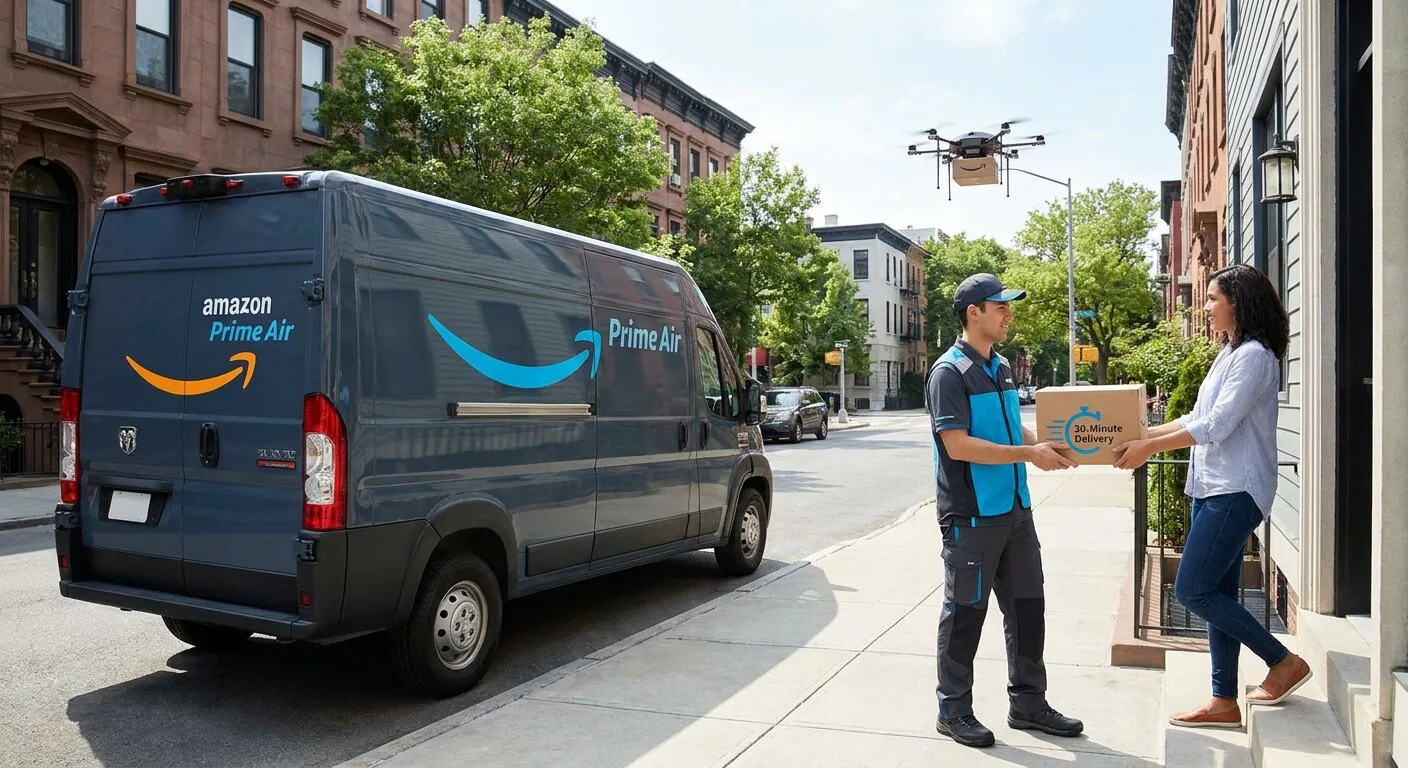
Amazon is expanding its 30-minute Amazon Now delivery to dozens of U.S. cities. What the speed benchmark means for DoorDash, Uber Eats and Instacart.
Amazon is expanding its ultrafast delivery service, Amazon Now, to dozens of major U.S. cities, aiming to fulfill urgent orders in 30 minutes or less. The e-commerce giant now competes directly with established food and grocery delivery platforms in the logistics war.
For nearly two decades, Amazon has set consumer expectations in shipping. After making two-day and same-day delivery the industry norm, the company is now targeting the "immediate need" segment. Its micro-hubs, roughly the size of a local drugstore, stock 3,500 high-frequency items like groceries, medications, and household essentials, and they sit in urban centers so that couriers can reach customers within a half-hour window.
DoorDash, Uber Eats, and Instacart have long dominated the under-one-hour delivery space through merchant partnerships, and the expansion goes straight at their market share. Amazon is competing on pure efficiency with its proprietary supply chain and AI-driven inventory management. The company analyzes hyper-local purchasing data to keep the right items, from bananas to charging cables, in stock at the nearest hub.
Faster delivery changes consumer behavior. Amazon has already observed that customers who use the 30-minute service tend to purchase more frequently and keep the platform "top of mind" for a wider variety of needs. Existing delivery giants now have a shrinking window to capture a customer's attention, and general speed promises will not hold it. They need granular performance data across every neighborhood they serve.
Ten minutes late now means a lost customer
Without precise tracking, a 10-minute delay might seem like a minor operational hiccup. In a market where the leader is hitting a 30-minute target, those 10 minutes represent a lost customer. Platforms need to see where they are winning and where they are falling behind at the zip-code level, because internal averages say little when a competitor is optimizing its entire supply chain for a specific 30-minute benchmark.
As Amazon scales the service to cities like New York, Houston, and Phoenix, the pressure on delivery margins and efficiency will grow. Meeting it takes a deep understanding of local logistics performance, beyond adding drivers. Companies can use ETA benchmarking to audit their delivery speeds against the new market standard and meet the expectations of an increasingly impatient consumer base.
If you want to know how your delivery times hold up against a 30-minute benchmark in your cities, reach out to our team at DoubleData.
