- Data analytics
Alphabet's Wing brings drone delivery to the San Francisco Bay Area
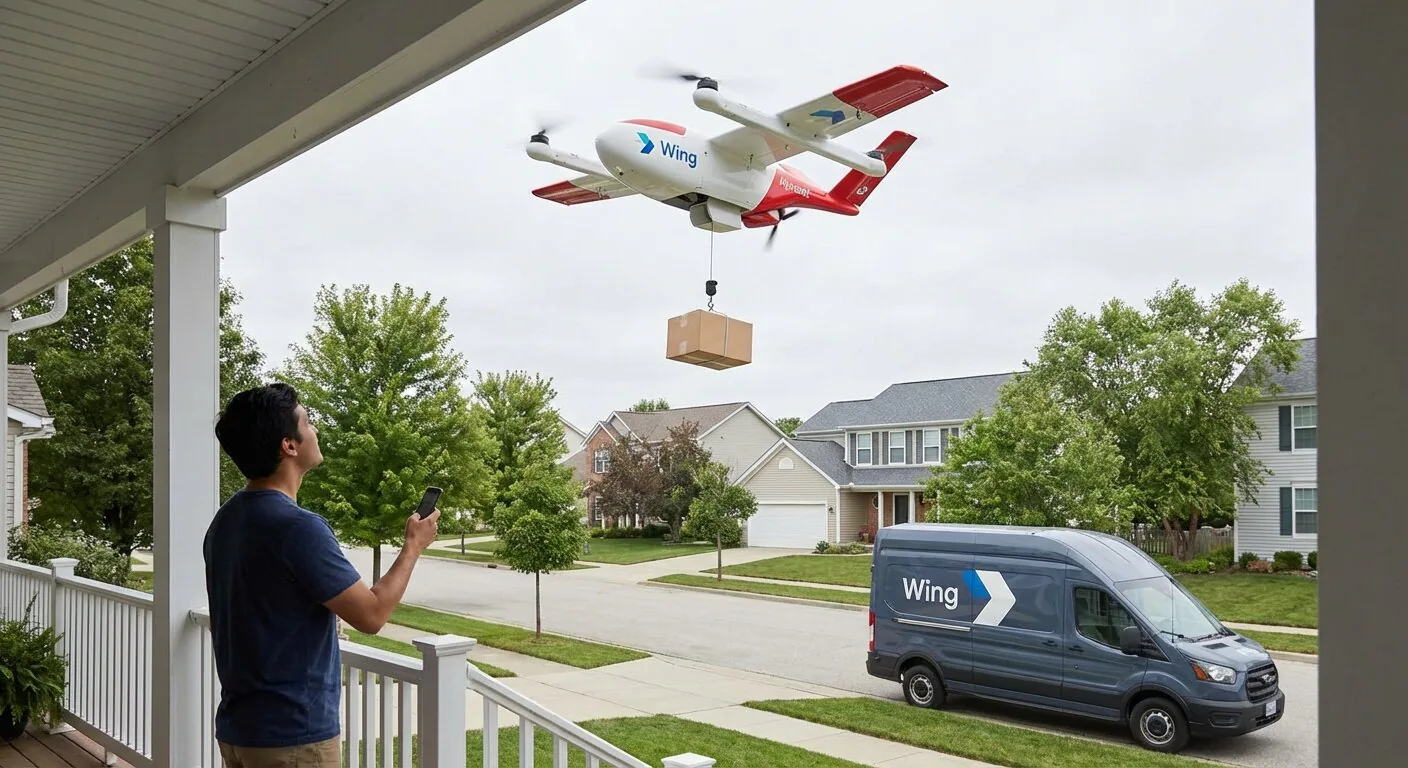
Alphabet's Wing is launching drone delivery in the San Francisco Bay Area, where automated aerial logistics are redefining delivery speed and competition.
Alphabet's drone unit, Wing, is set to launch residential delivery in the San Francisco Bay Area, targeting the persistent hurdles of dense urban last-mile logistics. The expansion scales a network already serving Walmart and DoorDash, and it raises how quickly consumers expect their orders to arrive.
Wing began as a moonshot project in the Bay Area over a decade ago. Its lightweight, automated drones bypass the traffic congestion that typically slows ground-based couriers, and in partnerships with Wendy's and Panera, Wing has already delivered food and household essentials in under 30 minutes. With 750,000 deliveries completed globally, the technology is becoming a standard operational tool for the industry's largest players.
A drone that flies directly to a customer's doorstep changes the traditional "delivery radius." Drones do not stop for red lights or one-way streets, which gives platforms that integrate aerial logistics an advantage and raises the bar for what customers consider a reasonable wait time. A competitor that can promise a 15-minute delivery while ground fleets are stuck in traffic puts brand loyalty at risk.
Drones reset the expected arrival time
Traditional logistics models rest on human-driven variables like vehicle availability and road conditions, while drone delivery brings a different set of metrics. Companies need to understand how automated flights affect the overall market standard for speed. Old delivery estimates lead to inaccurate performance reviews and lost customers as the "expected" arrival time keeps dropping in areas where drones are active.
Geographic proximity no longer guarantees a speed advantage. Teams can use ETA benchmarking to compare their delivery speeds with these automated benchmarks and see exactly where operations need to improve to keep pace with the market.
If you want to see how your delivery times compare in areas where drones now fly, contact our team: Contact DoubleData
Source: https://www.insurancejournal.com/news/west/2026/03/24/863117.htm
